Not that I've watched the movie, but some conservatives seem to have condemned the movie based on its perceived bias towards socialism. David Henderson, a libertarian, argues that in fact the movie upholds property rights - in this case the property rights of the fictitious alien race being invaded. Henderson doesn't use this term, but some would classify this case of property rights as Indigenous people's rights.
Some writers who are generally my allies in favor of capitalism and free markets have been critical of the movie Avatar. Reihan Salam, for example, on Forbes.com, writes, "In a sense, capitalism is the villain of Avatar." Edward Hudgins, a fan of Ayn Rand, as am I, writes that Avatar is "loaded with tired, mind-numbing leftist clichés."
But I don’t think Avatar is an attack on capitalism. One could leave the movie and have no idea, based on just the movie, about James Cameron’s view of capitalism. And while it did have some clichés (most movies do), I didn’t find it loaded. So what is Avatar? In fact, Avatar is a powerful antiwar movie – and a defense of property rights. For that reason, I found it easy to identify with those whose way of life was being destroyed by military might. (Warning: slight spoilers ahead.)
Consider one of Salam’s main arguments against Avatar. He points out, correctly, that the tremendous economic growth that relatively free markets have led to in the last two centuries is responsible for the fact that humans have grown taller, stronger, and healthier. The Na’vi, by contrast, even without clearly visible means of support, "do seem pretty tall, strong, healthy, and well-fed." Point taken. But do we really look for realism in a movie that’s about people on a fictitious planet? I found many things implausible about the movie – start with the fact that people who are obviously American go to another planet and find people who speak English better than most Americans do. Surely, then, the size of the humanoids’ bodies is one of the least important implausibilities.
Ed Hudgins criticizes the movie on the grounds that Pandora, the alien planet, is a "Garden of Eden or lost paradise inhabited by noble savages." This myth, he writes, "has done no end of harm to humanity." I agree with him, both about how Pandora is portrayed and about how much harm the myth of the noble savage has done.
But here’s the crucial question, a question that neither Salam nor Hudgins addresses: Do savages, noble or otherwise, have rights?
If given a choice between high-tech, with all its creature comforts, and the jungle life of Tarzan, I, like Salam and Hudgins, will take high-tech every time. But that’s not what the movie’s about. It’s about people from a high-tech civilization using technology to make war on people from a more primitive society so that they can steal their stuff. That’s a very different choice. I would choose not to kill them and take their property. What would Salam or Hudgins choose? They don’t make their answers clear, although they show zero sympathy for the victims of the attack.
In fact, the defense of property rights in Avatar is so clear that, at one point in the movie, when the bad guys are justifying their war on the grounds that they need "Unobtainium," I turned to a libertarian friend and said, "This is the Kelo decision." Recall that the Supreme Court, in Kelo v. City of New London, decided that it was all right to take Suzette Kelo’s property from its low-tech use as a house so that a major corporation could use it for a "grander" project.
Which brings me back to whether this movie was an attack on capitalism. I think not. To the extent that it makes any statement about capitalism, Avatar is a defense of capitalism. Capitalism is based on property rights and voluntary exchange. The Na’vi had property rights in the crucial tree and various other properties surrounding it. Did they own it as individuals or as community tribal property? We can’t be sure, but probably the latter. They had refused to sell the property to the outsiders. There was nothing the outsiders could give them that would make it worth their while. What should we, if we are good capitalists, conclude? That, just as in the Kelo case, the people currently sitting on the land value it more than the outsiders. The land is already in its highest-valued use. Hudgins and Salam could argue that that’s implausible. Surely there would be some finite price that the Na’vi would take in return for the Unobtainium. Maybe, maybe not. But once the Na’vi have made it clear that they’re unwilling to exchange it, that should be the end of things, shouldn’t it?
And here’s the irony: no one understands that better than Ed Hudgins. Here are his eloquent words following the disastrous Kelo decision:
"This [taking property forcibly from some to give to others] is the philosophy that informs the paternalist political elites of New London and elsewhere. They see themselves as a new ruling elite who manifest the will of the people. ‘L’état, c’est moi!’ These planners either put the good of an abstract collective – the city – ahead of the rights of the individuals who make it up, or they abrogate the rights of some individuals in order to give the undeserved and the unearned to another group of individuals in the name of survival and ‘economic development.’"
Now, Hudgins could argue that the analogy with the Kelo decision doesn’t make sense because this is tribal property, not individual property. OK. So imagine that some civilization more technologically advanced than ours discovers that there’s a rare mineral below the hills and mountains of Yosemite, which, in a sense, is tribal property. Our government has refused to sell. To get at the mineral, this other "civilization" must blast and bulldoze Yosemite down to nothing. If that more advanced group comes in and uses violence to grab Yosemite, would Hudgins say that was fine? I think not.
And here’s the other irony. Hudgins already understands all this. Hudgins argues, quite credibly, that in Avatar, the private company Resources Development Administration is a stand-in for Halliburton and the private army represents Blackwater, and so what we have is "the evil military-industrial complex." In other words, Hudgins recognizes that there are entities in the real world that are much like the bad guys in Avatar. The crucial question for him is: Whose side are you on?
Hudgins argues that James Cameron is claiming, "That’s capitalism for you." As noted earlier, it’s not clear that Cameron is so arguing. But if that’s what Cameron believes, shouldn’t Hudgins’s response be, "No, that’s corporatism for you." In another excellent piece on Kelo, aptly titled "One Giant Leap Toward Fascist America," Hudgins writes:
"The U.S. Supreme Court is allowing a local government to kick out of the house in which she was born 87-year-old Wilhelmina Dery and her husband, who has lived there with her for 60 years. Why? Because the government wants to seize their property, bulldoze theirs and many other houses, and to sell the land to other businesses and developers for private uses. While one must take great care in choosing words in political discussions, one must not mince them either. This decision in the Kelo vs. New London case is another giant step towards classical corporatism or fascism in America."
He’s right. Hudgins tugs our heart strings by noting that Wilhelmina Dery had lived in her house for 87 years. That’s kind of like the Na’vi getting attached to a tree, don’t you think? It’s entirely appropriate for Hudgins to appeal to our sympathy, just as it’s entirely appropriate for James Cameron to do the same. Read through everything Hudgins has written on Kelo and you won’t find a wisp of discussion about how low-tech or high-tech, savage or civilized, Mrs. Dery is. And that’s because it doesn’t matter. People in high-tech societies have rights. So do savages. It would be nice if Hudgins showed even one tenth of the concern for the "savages" over whom the "non-savages" of the U.S. military and CIA roll as he shows for an old woman who lives (or used to live) in a house.
One other thing that makes me doubt that Avatar is an attack on capitalism is the music that’s played when the high-tech army advances on Pandora. It sounds as if it’s straight from the Soviet Union’s now-defunct Red Army.
Avatar is an eloquent defense of the right of people in other civilizations to live as they please. As I mentioned, Hudgins is a fan of Ayn Rand and, in fact, makes his living advocating her ideas. So I’ll put it in terms that Ayn Rand used. On the issue of Avatar, Hudgins is "concrete-bound." He fails to see the basic principle: people’s right to live their lives in peace.
Showing posts with label Indigenous peoples' rights. Show all posts
Showing posts with label Indigenous peoples' rights. Show all posts
Monday, January 11, 2010

Tuesday, December 15, 2009
Discussion of the Gospel readings for Sunday
Luke 3:7-18
In Biblical times, tax collectors were local agents of the Roman Empire. They would collect taxes from the local population for the Empire. As Wikipedia reports that the Romans essentially charged the tax collectors an upfront fee in return for the privilege of collecting taxes, and they in turn were allowed to collect money or goods from the populace. Tax collectors in the Bible were not well-liked by their fellow Jews, and it seems that they were often considered to have defrauded their fellows. Certainly, they were agents of empire. John ordered them to stop defrauding fellow Jews.
Similarly, the Roman soldiers that John the Baptist was preaching to were agents of empire. They were the primary occupiers. They likely committed a multitude of abuses against the Jewish population and other populations they occupied. Here, John orders them not to extort money from the Jews. Jane Schaberg, a feminist theologian, contends that Mary could well have been raped by a Roman soldier; whether you buy that or not, soldiers have committed rape throughout history and it's all but given that the Romans did too.
John the Baptist was Jewish and was mainly preaching to the Jews. I wonder what he would have said if he'd been an American. It's not too much of a stretch to think that he would demand an end to all unjust occupation. He would have said, you must close Guantanamo. You must not torture any enemy combatants, or send them to places where they will be tortured. When soldiers or military contractors are based abroad, they must not commit crimes against the local population, and if they do, they must be punished to the full extent of the law. When fighting the enemy, you must not harm innocent civilians.
John said to the crowds that came out to be baptized by him, "You brood of vipers! Who warned you to flee from the wrath to come? Bear fruits worthy of repentance. Do not begin to say to yourselves, 'We have Abraham as our ancestor'; for I tell you, God is able from these stones to raise up children to Abraham. Even now the ax is lying at the root of the trees; every tree therefore that does not bear good fruit is cut down and thrown into the fire."
And the crowds asked him, "What then should we do?" In reply he said to them, "Whoever has two coats must share with anyone who has none; and whoever has food must do likewise." Even tax collectors came to be baptized, and they asked him, "Teacher, what should we do?" He said to them, "Collect no more than the amount prescribed for you." Soldiers also asked him, "And we, what should we do?" He said to them, "Do not extort money from anyone by threats or false accusation, and be satisfied with your wages."
As the people were filled with expectation, and all were questioning in their hearts concerning John, whether he might be the Messiah, John answered all of them by saying, "I baptize you with water; but one who is more powerful than I is coming; I am not worthy to untie the thong of his sandals. He will baptize you with the Holy Spirit and fire. His winnowing fork is in his hand, to clear his threshing floor and to gather the wheat into his granary; but the chaff he will burn with unquenchable fire."
So, with many other exhortations, he proclaimed the good news to the people.
In Biblical times, tax collectors were local agents of the Roman Empire. They would collect taxes from the local population for the Empire. As Wikipedia reports that the Romans essentially charged the tax collectors an upfront fee in return for the privilege of collecting taxes, and they in turn were allowed to collect money or goods from the populace. Tax collectors in the Bible were not well-liked by their fellow Jews, and it seems that they were often considered to have defrauded their fellows. Certainly, they were agents of empire. John ordered them to stop defrauding fellow Jews.
Similarly, the Roman soldiers that John the Baptist was preaching to were agents of empire. They were the primary occupiers. They likely committed a multitude of abuses against the Jewish population and other populations they occupied. Here, John orders them not to extort money from the Jews. Jane Schaberg, a feminist theologian, contends that Mary could well have been raped by a Roman soldier; whether you buy that or not, soldiers have committed rape throughout history and it's all but given that the Romans did too.
John the Baptist was Jewish and was mainly preaching to the Jews. I wonder what he would have said if he'd been an American. It's not too much of a stretch to think that he would demand an end to all unjust occupation. He would have said, you must close Guantanamo. You must not torture any enemy combatants, or send them to places where they will be tortured. When soldiers or military contractors are based abroad, they must not commit crimes against the local population, and if they do, they must be punished to the full extent of the law. When fighting the enemy, you must not harm innocent civilians.
Thursday, December 10, 2009
Sojourners blog: Beyond ‘Diversity’: New Creation and a Mestizo Vision
Chris Rice blogs for Sojourners on the vision of diversity that God has for the church.
“Integration” and “diversity” do not express God’s purpose for reconciliation deeply enough. What we need is a fresh paradigm that declares our new culture in Christ.
A workshop last month in Cincinnati at the Christian Community Development Association conference (CCDA) confirmed my conviction that Christians need fresh language regarding our mission and identity in a divided world.
During my workshop, I remarked that as “reconciliation” becomes both increasingly popular and contested, and as such potentially unhelpful, the critical question is “reconciliation toward what?” I mentioned two dominant paradigms.
• Integration is the first paradigm — overcoming oppression through social equality and access to mainstream benefits. There has been deep progress in this area, at the same time the fierce historical opposition to racial and economic integration in American life is a sign of a captivity which is yet to be overcome. Yet as early as the 1956 Montgomery bus boycott Martin Luther King Jr. argued that integration would not go far enough to heal America: “The end,” preached King, “is reconciliation, the end is redemption, the end is the creation of the beloved community.”
Notions of integration easily lead to “equal and separate” and avoid even more difficult and holy work. As Charles Marsh has argued in The Beloved Community, “[W]hile the civil rights movement defeated segregation and forever changed American society, the nation has experienced precious little repentance, reconciliation, and costly discipleship.”
• Diversity has been the other dominant response to “reconciliation toward what?” Over the last ten years there has been an explosion of initiatives and literature around “inclusiveness” and “diversity.” Some Christian denominations and institutions are diversifying their leadership and constituencies in ways which are transformative and should be celebrated. Pastor Mark DeMaz pointed out to me recently the traction that “multi” has gotten in the evangelical world: “multi-ethnic” (InterVarsity Christian Fellowship), “multi-cultural” (David Anderson of Bridgeway Community Church), “multi-racial” (sociologist and author George Yancey). This is long overdue, and Soong Chan Rah’s much-discussed book The Next Evangelicalism shows how far there is to go.
Yet at CCDA I said that “multi” does not capture the work of the Holy Spirit within history powerfully enough. The story of creation and humanity as diverse and good must be completed by the story of God’s redemption of the ways the fall deformed the gift of difference through the trauma of sin. The trajectory of the Christian story is an interruption and transformation of historical identities and fixed groups (Jew, Greek, male, female, slave, free) toward a fluidity of identity and culture: when the Antioch church becomes a new people across these lines, a community and politics (where Jesus is Lord, not Caesar) comes into existence that is so strange, it requires a new language. It is at Antioch that the disciples are first called “Christians.”
If integration and diversity are insufficient paradigms for “reconciliation toward what” in an increasingly multicultural America and world wracked by intensifying polarizations, what’s the alternative?
“Consequently, from now on we regard no one according to the flesh; even if we once knew Christ according to the flesh, yet now we know him so no longer. So whoever is in Christ is a new creation: the old things have passed away; behold, new things have come. And all this is from God, who has reconciled us to himself through Christ and given us the ministry of reconciliation…” 2 Cor. 5:15-18
What’s the alternative? I believe we find it in the above passage.
At the CCDA, I suggested that we consider the implications of “New Creation.” New Creation breaks beyond tribal self-sufficiency to a “toward what” grounded in the story and power of God’s gift in Jesus Christ which interrupts the ground of injustice and divides with conversion toward a new community, new desires, and a new Lord.
New Creation is a call to being changed (metanoia) in a visible new way of life and sharing together (koinonia, including a new economic life between rich and poor, see Acts 2 and Acts 4, and including life with strangers who become companions). This is why, for example, I prefer to speak of “interracial” churches. In saying “interracial” (e.g. interracial churches or interracial marriage) instead of “biracial” we point to a cultural intimacy, interdependence, and mutual transformation which is a sign of a “new humanity.” There is a rich literature around “transcultural” or “third culture kids” who make up a kind of “new people” who don’t fit into the homeland their parents left nor the culture they are living in. As a missionary kid who grew up in Korea, I identify profoundly with this.
Yet the English language may itself be so ridden with dichotomies that it cannot capture how New Creation interrupts us in the “sluggish in between” of human life between Jesus’ resurrection and return. But another language does.
Here is how Duke Divinity School scholar Edgardo Colon-Emeric expresses it:
My friend Edgardo goes on to say, “The church needs leaders who have eyes to see that all ethnic ministries are provisional because the future is mestizo.” To repeat the key claim, “this mixed heritage is not simply a historical or ethnic marker; it is also the goal of Christian existence.”
As I told those who attended my CCDA workshop, I am not advocating being blind to or forgetful of the history of oppression and how this trajectory deforms community, institutional, and church life. A notion of cheap “reconciliation without memory” leads to assimilation into the dominant culture and its values. This is exactly why New Creation matters: We are freed from captivity through shared journeys and communities of conversion which make difference meaningful in an exchange of gifts and a vision of mutuality which is both truthful about the grip of sin and reaches toward a new place of life together.
Through the ministry of Maggy Barankitse in the east African country of Burundi, orphans of violence between rival Tutsi and Hutu groups have lived for years together at Maison Shalom (”House of Peace”). On top of former tribal killing fields, they share intimate daily life with the multiplicity of people who come there including from the “Twa” minority, nearby Congo, and “Muzungus” (outsiders) from Europe and the U.S. Over time, their identities become reshaped and quite confused in this new community. When questioned about her ethnic identity, one orphan speaks of herself as being a “Hutsi-Twa-Congo-Zungu” — pulling all these peoples into a kind of one new humanity.
Integration and Diversity do not state the power of the Holy Spirit’s interruption of history deeply enough. To emphasize Edgardo’s point, “all ethnic ministries are provisional because the future is mestizo.” Diversity and integration lack a telos, a goal, a “for what purpose?” New Creation and a mestizo vision properly understood within God’s work of “reconciling all things in Christ” (Col. 1:15-23) offer a fresh paradigm of “toward what” that is not only deeply transformative but beautiful, a bit scary, and subversive to the way things are. Not to mention a deeper way to holiness and vision which requires God.
Chris Rice is co-director of the Center for Reconciliation at Duke Divinity School. He is author of Reconciling All Things, Grace Matters, and More Than Equals. He writes regularly at his blog, Reconcilers with Chris Rice. This article appears courtesy of a partnership with UrbanFaith.com.
[Editor: To be sure, mestizo isn't a perfect analogy, since they were likely treated better than the fully Indigenous Americans by the Europeans. Nonetheless, the point is a good one.]
“Integration” and “diversity” do not express God’s purpose for reconciliation deeply enough. What we need is a fresh paradigm that declares our new culture in Christ.
A workshop last month in Cincinnati at the Christian Community Development Association conference (CCDA) confirmed my conviction that Christians need fresh language regarding our mission and identity in a divided world.
During my workshop, I remarked that as “reconciliation” becomes both increasingly popular and contested, and as such potentially unhelpful, the critical question is “reconciliation toward what?” I mentioned two dominant paradigms.
• Integration is the first paradigm — overcoming oppression through social equality and access to mainstream benefits. There has been deep progress in this area, at the same time the fierce historical opposition to racial and economic integration in American life is a sign of a captivity which is yet to be overcome. Yet as early as the 1956 Montgomery bus boycott Martin Luther King Jr. argued that integration would not go far enough to heal America: “The end,” preached King, “is reconciliation, the end is redemption, the end is the creation of the beloved community.”
Notions of integration easily lead to “equal and separate” and avoid even more difficult and holy work. As Charles Marsh has argued in The Beloved Community, “[W]hile the civil rights movement defeated segregation and forever changed American society, the nation has experienced precious little repentance, reconciliation, and costly discipleship.”
• Diversity has been the other dominant response to “reconciliation toward what?” Over the last ten years there has been an explosion of initiatives and literature around “inclusiveness” and “diversity.” Some Christian denominations and institutions are diversifying their leadership and constituencies in ways which are transformative and should be celebrated. Pastor Mark DeMaz pointed out to me recently the traction that “multi” has gotten in the evangelical world: “multi-ethnic” (InterVarsity Christian Fellowship), “multi-cultural” (David Anderson of Bridgeway Community Church), “multi-racial” (sociologist and author George Yancey). This is long overdue, and Soong Chan Rah’s much-discussed book The Next Evangelicalism shows how far there is to go.
Yet at CCDA I said that “multi” does not capture the work of the Holy Spirit within history powerfully enough. The story of creation and humanity as diverse and good must be completed by the story of God’s redemption of the ways the fall deformed the gift of difference through the trauma of sin. The trajectory of the Christian story is an interruption and transformation of historical identities and fixed groups (Jew, Greek, male, female, slave, free) toward a fluidity of identity and culture: when the Antioch church becomes a new people across these lines, a community and politics (where Jesus is Lord, not Caesar) comes into existence that is so strange, it requires a new language. It is at Antioch that the disciples are first called “Christians.”
If integration and diversity are insufficient paradigms for “reconciliation toward what” in an increasingly multicultural America and world wracked by intensifying polarizations, what’s the alternative?
“Consequently, from now on we regard no one according to the flesh; even if we once knew Christ according to the flesh, yet now we know him so no longer. So whoever is in Christ is a new creation: the old things have passed away; behold, new things have come. And all this is from God, who has reconciled us to himself through Christ and given us the ministry of reconciliation…” 2 Cor. 5:15-18
What’s the alternative? I believe we find it in the above passage.
At the CCDA, I suggested that we consider the implications of “New Creation.” New Creation breaks beyond tribal self-sufficiency to a “toward what” grounded in the story and power of God’s gift in Jesus Christ which interrupts the ground of injustice and divides with conversion toward a new community, new desires, and a new Lord.
New Creation is a call to being changed (metanoia) in a visible new way of life and sharing together (koinonia, including a new economic life between rich and poor, see Acts 2 and Acts 4, and including life with strangers who become companions). This is why, for example, I prefer to speak of “interracial” churches. In saying “interracial” (e.g. interracial churches or interracial marriage) instead of “biracial” we point to a cultural intimacy, interdependence, and mutual transformation which is a sign of a “new humanity.” There is a rich literature around “transcultural” or “third culture kids” who make up a kind of “new people” who don’t fit into the homeland their parents left nor the culture they are living in. As a missionary kid who grew up in Korea, I identify profoundly with this.
Yet the English language may itself be so ridden with dichotomies that it cannot capture how New Creation interrupts us in the “sluggish in between” of human life between Jesus’ resurrection and return. But another language does.
Here is how Duke Divinity School scholar Edgardo Colon-Emeric expresses it:
According to the seer of Patmos [John's vision in Revelation 7:9-17 of a multitude from every nation, tongue, language, worshipping the Lamb], the Church is a mestizo assembly gathered from every nation in praise of the God of Abraham, Issac, and Jacob, the Father of our Lord Jesus Christ.
Reflecting on this Spanish word mestizo, Edgardo, who is also the director of Duke’s Hispanic House of Studies, adds:
Mestizo … refers literally to a mixture. The term was first used to describe the children of the violent encounter between European fathers and Amerindian mothers. Neither European nor Indian, these children belonged to a new people, a people of mixed heritage. But this mixed heritage is not simply a historical or ethnic marker; it is also the goal of Christian existence. In the words of Mexican-American theologian Virgil Elizondo ‘the future is mestizo,’ not because of ethnic mixing, but because the new humanity in Christ is a mestizo humanity of Jews and Gentiles.
My friend Edgardo goes on to say, “The church needs leaders who have eyes to see that all ethnic ministries are provisional because the future is mestizo.” To repeat the key claim, “this mixed heritage is not simply a historical or ethnic marker; it is also the goal of Christian existence.”
As I told those who attended my CCDA workshop, I am not advocating being blind to or forgetful of the history of oppression and how this trajectory deforms community, institutional, and church life. A notion of cheap “reconciliation without memory” leads to assimilation into the dominant culture and its values. This is exactly why New Creation matters: We are freed from captivity through shared journeys and communities of conversion which make difference meaningful in an exchange of gifts and a vision of mutuality which is both truthful about the grip of sin and reaches toward a new place of life together.
Through the ministry of Maggy Barankitse in the east African country of Burundi, orphans of violence between rival Tutsi and Hutu groups have lived for years together at Maison Shalom (”House of Peace”). On top of former tribal killing fields, they share intimate daily life with the multiplicity of people who come there including from the “Twa” minority, nearby Congo, and “Muzungus” (outsiders) from Europe and the U.S. Over time, their identities become reshaped and quite confused in this new community. When questioned about her ethnic identity, one orphan speaks of herself as being a “Hutsi-Twa-Congo-Zungu” — pulling all these peoples into a kind of one new humanity.
Integration and Diversity do not state the power of the Holy Spirit’s interruption of history deeply enough. To emphasize Edgardo’s point, “all ethnic ministries are provisional because the future is mestizo.” Diversity and integration lack a telos, a goal, a “for what purpose?” New Creation and a mestizo vision properly understood within God’s work of “reconciling all things in Christ” (Col. 1:15-23) offer a fresh paradigm of “toward what” that is not only deeply transformative but beautiful, a bit scary, and subversive to the way things are. Not to mention a deeper way to holiness and vision which requires God.
Chris Rice is co-director of the Center for Reconciliation at Duke Divinity School. He is author of Reconciling All Things, Grace Matters, and More Than Equals. He writes regularly at his blog, Reconcilers with Chris Rice. This article appears courtesy of a partnership with UrbanFaith.com.
[Editor: To be sure, mestizo isn't a perfect analogy, since they were likely treated better than the fully Indigenous Americans by the Europeans. Nonetheless, the point is a good one.]
Saturday, December 05, 2009
Washington Post: U.S. struggles to keep step with Japan's shifting foreign policy
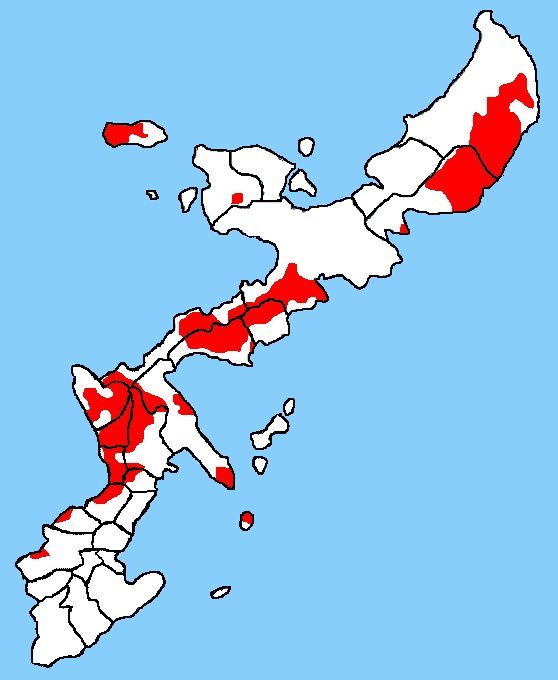
(Wikipedia: US military bases on Okinawa)
John Pomfret and Blaine Harden report for the Washington Post.
When the Democratic Party of Japan roared to victory in August, unseating a party that had run Japan almost without interruption since the 1950s, Obama administration officials fanned out across Washington with an unexpected message, given their campaign embrace of change.
U.S. relations with Japan, the message went, were going to stay basically the same.
Yes, the DPJ had run on a promise of ending Japan's decades-old pattern of "passive" behavior in its dealings with the United States. Yes, a few days before his party's victory, Yukio Hatoyama, who would become Japan's new prime minister, launched a jeremiad against U.S.-style capitalism, and advanced a contradictory view of Asia in which the United States appeared at once welcome and unwanted. Still, administration officials argued, the U.S. security relationship with Japan -- which for almost 60 years was the cornerstone of U.S. policy in Asia -- would be business as usual.
But three months later, after a trip to Tokyo by President Obama and numerous American officials, the administration is still struggling to find its way with Japan -- unaccustomed, observers say, to a Tokyo government without a static foreign policy.
The challenges were on display this week in Japan, where U.S. and Japanese officials met again Friday to deal with the latest wrinkle in their relationship -- a dispute over a $26 billion plan to move U.S. troops off and around the southern Japanese island of Okinawa. The meeting ended with no apparent agreement.
The Futenma dispute
Okinawa hosts most of the 36,000 U.S. military personnel based in Japan, and the Futenma Marine air station, located in a densely populated part of the island, has become a symbol of the noise, pollution and crime that many Japanese associate with the American military presence. Under the terms of the deal, Futenma would be moved from the center of a city to Okinawa's relatively unpopulated southeastern coast. But Okinawa voted unanimously in August for DPJ candidates who opposed the deal and want a smaller American footprint on an island where 19 percent of the land is occupied by U.S. forces.
Before the meeting Friday, U.S. Ambassador John Roos said in his first public speech in Japan since he arrived three months ago that the Obama administration expects Japan to move "expeditiously" to resolve the Futenma dispute. He used "expeditiously" twice, the same word Obama used repeatedly when he visited Japan last month and called for prompt action on the base controversy.
But Hatoyama's government made clear this week that it has no intention of meeting the Americans' hurry-up-and-decide demands.
"We are not discussing this on the premise that it has to be decided by the end of the year," Hatoyama told reporters.
A big reason is that Hatoyama this week faced the prospect of a revolt by a coalition partner whose votes he needs to pass legislation in the upper house of parliament. The leader of the Social Democratic Party, Mizuho Fukushima, said her party might quit the coalition if Hatoyama honors the deal to move the Futenma air station.
'Domestic politics matter'
The threat left Hatoyama squeezed between domestic political imperatives and U.S. expectations -- a spectacle U.S. officials are not accustomed to seeing in Japan.
Daniel Sneider, a Japan expert at Stanford University, said the United States has yet to really take into account the significance of the political changes wrought by the August election. "Domestic politics matter in Japan now in a way that they didn't when you had a virtual one-party state for 50 years," he said. "Do elections and domestic politics influence foreign policy in the United States? Of course. Now they do in Japan, too."
Sneider said American officials need to give Japan more time.
But the problem, according to the officials, is that time could just make an Okinawa deal more complicated.
For example, the mayor of the town to which the Marine base is supposed to be moved backs the relocation plan. But he is up for reelection in January, and his opponent, who is favored, is less inclined to welcome the Marines. Okinawa will also elect a governor next year, and so far none of the candidates appears to support the relocation deal.
A senior administration official said he thinks Japan's new leaders will ultimately agree to the deal, given the enormous public support for the security alliance with the United States. "It'd be very destructive to them domestically to be seen as casual or indifferent to the alliance," he said. "In Japan, it would be a dominant national issue, and so I think the Japanese leadership has a huge stake in not being seen as mismanaging this issue."
Defense Secretary Robert M. Gates said in October that if Japans backs out of the deal, the U.S. military would cancel a planned move of 8,000 Marines from Okinawa to Guam and refuse to give back several parcels of land to the Okinawans. [Editor: Emphasis mine. When you're refusing to return someone their own land, that's a sign you're doing something wrong.]
But having weighed the threats, Hatoyama appears focused on putting off a decision on the air station -- even if it means annoying the United States -- to hold his ruling coalition together.
"I have to take [the Social Democratic Party] seriously," he told reporters Thursday night.
The threat to Hatoyama's legislative agenda is real, analysts said.
"If the Social Democratic Party leaves the government, he will lose his majority in the upper house, and that means no new laws can be passed," said Minoru Morita, an analyst in Tokyo. "If that happens, the cabinet will collapse. Hatoyama thinks the United States should be kind enough to wait on the base issue until this political problem is solved."
Harden reported from Tokyo.
Thursday, December 03, 2009
Counterpunch: A Dismal Record: Palin and Alaskan Natives and Tribes
By LLOYD MILLER, writing for Counterpunch. Counterpunch is considered leftist.
Perhaps no issue is of greater importance to Alaska Native peoples as the right to hunt and fish according to ancient customary and traditional practices, and to carry on the subsistence way of life for future generations.
Governor Sarah Palin has consistently opposed those rights.
Once in office, Governor Palin decided to continue litigation that seeks to overturn every subsistence fishing determination the federal government has ever made in Alaska. (State of Alaska v. Norton, 3:05-cv-0158-HRH (D. Ak).) In pressing this case, Palin decided against using the Attorney General (which usually handles State litigation) and instead continued contracting with Senator Ted Stevens' brother-in-law's law firm (Birch, Horton, Bittner & Cherot).
The goal of Palin's law suit is to invalidate all the subsistence fishing regulations the federal government has issued to date to protect Native fishing, and to force the courts instead to take over the roll of setting subsistence regulations. Palin's law suit seeks to diminish subsistence fishing rights in order to expand sport and commercial fishing.
In May 2007, the federal court rejected the State's main challenge, holding that Congress in 1980 had expressly granted the U.S. Interior and Agriculture Departments the authority to regulate and protect Native and rural subsistence fishing activities in Alaska. (Decision entered May 15, 2007 (Dkt. No. 110).)
Notwithstanding this ruling, Palin continues to argue in the litigation that the federal subsistence protections are too broad, and should be narrowed to exclude vast areas from subsistence fishing, in favor of sport and commercial fishing. Palin opposes subsistence protections in marine waters, on many of the lands that Natives selected under their 1971 land claims settlement with the state and federal governments, and in many of the rivers where Alaska Natives customarily fish. (Alaska Complaint at 15-18.) Palin also opposes subsistence fishing protections on Alaska Native federal allotments that were deeded to individuals purposely to foster Native subsistence activities. All these issues are now pending before the federal district court.
2. Palin has attacked Alaska Native Subsistence Hunting
Palin has also sought to invalidate critical determinations the Federal Subsistence Board has made regarding customary and traditional uses of game, specifically to take hunting opportunities away from Native subsistence villagers and thereby enhance sport hunting.
Palin's attack here on subsistence has focused on the Ahtna Indian people in Chistochina. Although the federal district court has rejected Palin's challenge, she has carried on an appeal that was argued in August 2008. State of Alaska v. Fleagle, No. 07-35723 (9th Cir.).)
In both hunting and fishing matters, Palin has continued uninterrupted the policies initiated by the former Governor Frank Murkowski Administration, challenging hunting and fishing protections that Native people depend upon for their subsistence way of life in order to enhance sport fishing and hunting opportunities. Palin's lawsuits are a direct attack on the core way of life of Native Tribes in rural Alaska.
3. Palin has attacked Alaska Tribal Sovereignty
Governor Palin opposes Alaska tribal sovereignty.
Given past court rulings affirming the federally recognized tribal status of Alaska Native villages, Palin does not technically challenge that status. But Palin argues that Alaska Tribes have no authority to act as sovereigns, despite their recognition.
So extreme is Palin on tribal sovereignty issues that she has sought to block tribes from exercising any authority whatsoever even over the welfare of Native children, adhering to a 2004 legal opinion issued by the former Murkowski Administration that no such jurisdiction exists (except when a state court transfers a matter to a tribal court).
Both the state courts and the federal courts have struck down Palin's policy of refusing to recognize the sovereign authority of Alaska Tribes to address issues involving Alaska Native children. Native Village of Tanana v. State of Alaska, 3AN-04-12194 CI (judgment entered Aug. 26, 2008) (Ak. Super. Ct.); Native Kaltag Tribal Council v. DHHS, No. 3:06-cv-00211-TMB (D. Ak.), pending on appeal No 08-35343 (9th Cir.)). Nonetheless, Palin's policy of refusing to recognize Alaska tribal sovereignty remains unchanged.
4. Palin has attacked Alaska Native Languages
Palin has refused to accord proper respect to Alaska Native languages and voters by refusing to provide language assistance to Yup'ik speaking Alaska Native voters. As a result, Palin was just ordered by a special three-judge panel of federal judges to provide various forms of voter assistance to Yup'ik voters residing in southwest Alaska. Nick v. Bethel, No. 3:07-cv-0098-TMB (D. Ak.) (Order entered July 30, 2008). Citing years of State neglect, Palin was ordered to provide trained poll workers who are bilingual in English and Yup'ik; sample ballots in written Yup'ik; a written Yup'ik glossary of election terms; consultation with local Tribes to ensure the accuracy of Yup'ik translations; a Yup'ik language coordinator; and pre-election and post-election reports to the court to track the State's efforts.
In sum, measured against some the rights that are most fundamental to Alaska Native Tribes - the subsistence way of life, tribal sovereignty and voting rights - Palin's record is a failure.
Lloyd Miller is a native rights lawyer in Anchorage.
Perhaps no issue is of greater importance to Alaska Native peoples as the right to hunt and fish according to ancient customary and traditional practices, and to carry on the subsistence way of life for future generations.
Governor Sarah Palin has consistently opposed those rights.
Once in office, Governor Palin decided to continue litigation that seeks to overturn every subsistence fishing determination the federal government has ever made in Alaska. (State of Alaska v. Norton, 3:05-cv-0158-HRH (D. Ak).) In pressing this case, Palin decided against using the Attorney General (which usually handles State litigation) and instead continued contracting with Senator Ted Stevens' brother-in-law's law firm (Birch, Horton, Bittner & Cherot).
The goal of Palin's law suit is to invalidate all the subsistence fishing regulations the federal government has issued to date to protect Native fishing, and to force the courts instead to take over the roll of setting subsistence regulations. Palin's law suit seeks to diminish subsistence fishing rights in order to expand sport and commercial fishing.
In May 2007, the federal court rejected the State's main challenge, holding that Congress in 1980 had expressly granted the U.S. Interior and Agriculture Departments the authority to regulate and protect Native and rural subsistence fishing activities in Alaska. (Decision entered May 15, 2007 (Dkt. No. 110).)
Notwithstanding this ruling, Palin continues to argue in the litigation that the federal subsistence protections are too broad, and should be narrowed to exclude vast areas from subsistence fishing, in favor of sport and commercial fishing. Palin opposes subsistence protections in marine waters, on many of the lands that Natives selected under their 1971 land claims settlement with the state and federal governments, and in many of the rivers where Alaska Natives customarily fish. (Alaska Complaint at 15-18.) Palin also opposes subsistence fishing protections on Alaska Native federal allotments that were deeded to individuals purposely to foster Native subsistence activities. All these issues are now pending before the federal district court.
2. Palin has attacked Alaska Native Subsistence Hunting
Palin has also sought to invalidate critical determinations the Federal Subsistence Board has made regarding customary and traditional uses of game, specifically to take hunting opportunities away from Native subsistence villagers and thereby enhance sport hunting.
Palin's attack here on subsistence has focused on the Ahtna Indian people in Chistochina. Although the federal district court has rejected Palin's challenge, she has carried on an appeal that was argued in August 2008. State of Alaska v. Fleagle, No. 07-35723 (9th Cir.).)
In both hunting and fishing matters, Palin has continued uninterrupted the policies initiated by the former Governor Frank Murkowski Administration, challenging hunting and fishing protections that Native people depend upon for their subsistence way of life in order to enhance sport fishing and hunting opportunities. Palin's lawsuits are a direct attack on the core way of life of Native Tribes in rural Alaska.
3. Palin has attacked Alaska Tribal Sovereignty
Governor Palin opposes Alaska tribal sovereignty.
Given past court rulings affirming the federally recognized tribal status of Alaska Native villages, Palin does not technically challenge that status. But Palin argues that Alaska Tribes have no authority to act as sovereigns, despite their recognition.
So extreme is Palin on tribal sovereignty issues that she has sought to block tribes from exercising any authority whatsoever even over the welfare of Native children, adhering to a 2004 legal opinion issued by the former Murkowski Administration that no such jurisdiction exists (except when a state court transfers a matter to a tribal court).
Both the state courts and the federal courts have struck down Palin's policy of refusing to recognize the sovereign authority of Alaska Tribes to address issues involving Alaska Native children. Native Village of Tanana v. State of Alaska, 3AN-04-12194 CI (judgment entered Aug. 26, 2008) (Ak. Super. Ct.); Native Kaltag Tribal Council v. DHHS, No. 3:06-cv-00211-TMB (D. Ak.), pending on appeal No 08-35343 (9th Cir.)). Nonetheless, Palin's policy of refusing to recognize Alaska tribal sovereignty remains unchanged.
4. Palin has attacked Alaska Native Languages
Palin has refused to accord proper respect to Alaska Native languages and voters by refusing to provide language assistance to Yup'ik speaking Alaska Native voters. As a result, Palin was just ordered by a special three-judge panel of federal judges to provide various forms of voter assistance to Yup'ik voters residing in southwest Alaska. Nick v. Bethel, No. 3:07-cv-0098-TMB (D. Ak.) (Order entered July 30, 2008). Citing years of State neglect, Palin was ordered to provide trained poll workers who are bilingual in English and Yup'ik; sample ballots in written Yup'ik; a written Yup'ik glossary of election terms; consultation with local Tribes to ensure the accuracy of Yup'ik translations; a Yup'ik language coordinator; and pre-election and post-election reports to the court to track the State's efforts.
In sum, measured against some the rights that are most fundamental to Alaska Native Tribes - the subsistence way of life, tribal sovereignty and voting rights - Palin's record is a failure.
Lloyd Miller is a native rights lawyer in Anchorage.
Sunday, October 04, 2009
Vanessa Carmichael: What we don't say about illegal immigration
Vanessa Carmichael has a very insightful article on the Huffington Post about race in Latin America and how it impacts immigration to the US. Here's a big chunk:
On my last trip to Mexico in December of 2006, I took my mother to see the ruins of the Aztec and Mayan temples with a few days of leisure on the beaches of Cancun. My mother, who is from a farming family of the Smoky Mountains in Tennessee, constantly remarked how lovely a country Mexico was. She had not seen the rural towns and abject poverty that much of the Indian population of Mexico subsists in as I had many years ago backpacking through the country. To her, Mexico City was a bustling metropolis with clean streets and pristine neighborhoods, nice restaurants and great shopping. We arrived at night.
We stayed at the Camino Real Hotel in the upscale neighborhood and Jewish enclave of Polanco, which hosts some of the best restaurants, private homes and landscaped parks the city has to offer. Not far, in the heart of the financial district, masses of professionals went about business, in and out of prodigious skyscrapers and elegant old world municipal buildings. The streets were lined with fine sculptures displaying the roots of Mexican art, a convergence of vibrant native and exquisite European aesthetics. What was striking about Mexico City and Cancun as opposed to Latin American communities in the United States was, no doubt, the color line. The banks, hotels, municipal buildings, and upscale residences were operated and occupied by Mexicans who looked quite different from the Latinos you see tending garden or cleaning house in Los Angeles.
According to the Journal of Diversity Management 2008 Report on Mexico:
Individuals of mixed European and Indian background, the Mestizos, represent 60% of the population. The rest of the population is 30% Indian, 9% white and 1% other. Income and wealth are distributed very unequally among these racial groups. The oligarchy is exclusively white, and whites are the vast majority in the wealthy social class immediately below it. Next in the economic hierarchy are the Mestizos. Within the Mestizos, however, there is a discernable economic pecking order, with those of predominantly European features, especially light skin, the white/Mestizos, ahead of those with predominantly Indian traces, like dark skin. At the bottom are the Indians, who are the majority in the two poorest deciles. That is, there is a strong positive correlation between European appearance and income in Mexican society.
In Brazil, Afro Brazilians make up almost half of the total population -- but nearly two-thirds of the nation's poor. Nonwhites were nearly nonexistent in Brazilian universities until affirmative action was instituted in 2001 and as a consequence the middle-class and the elite of the country are almost entirely white. Similarly, in 2004 The United Nations Economic and Social Council sent a delegation to Guatemala, Honduras and Nicaragua, where the majority of the population is Mestizo, and found that trends in all three countries reveal the existence of deeply rooted discrimination:
(a) a troubling correlation between poverty-stricken areas and areas inhabited by communities of indigenous people and people of African descent; (b) the marginal involvement of representatives of those communities in power structures - the government, parliament and the judiciary - as well as their insignificant presence in decision-making positions in the media; and (c) their treatment in the media as objects of folklore. Ironically, what this study also found was while the Spanish language has come to prevalence in the United States on much of the west coast, Southwest, Florida and New York, the indigenous people of Central America fear they will eventually lose their language and identity because of the shortage of bilingual education and programs there. No doubt, Latin American society has relegated much of its population to abject poverty, without a hope of ever getting out, on the basis of skin color.
Color discrimination is undeniably widespread in Latin America, a belief and practice that is tacitly promoted and promulgated through the generations. The question that begs to be asked is how the caste system in Latin America has gone on for so long without much acknowledgment from the international media or the American government? We have seen revolution over racial inequality in India, the United States, and South Africa, yet all the while Latin America has been allowed to discriminate on the basis of skin color without much protest from within the region or the outside world. Perhaps it is because there is a grave misperception of race in Latin America from the international community. Perhaps to the outside world everyone in Latin America is one race, a new race: Hispanic/Latino. This misperception doesn't equate the color bias in Latin America to the apartheid of South Africa. For the injustice of South Africa was committed by whites against blacks, imperialists against natives. But the origins of the caste system in Latin America are fundamentally the same, founded on beliefs that are indistinguishable from those that created apartheid in South Africa, or Jim Crow in the United States and the Jātis in India--the belief that physical characteristics deem mental acuity, ability and moral character and therefore justify inequality.
The caste system in Latin America may be more surreptitious but it is most similar to the caste system in India in that it is commonly adhered to by those who suffer the most within its restrictions. In 1994 with the passing of Proposition 187 by nearly 60% of California's voters, some 70,000 people showed up on the streets of Los Angeles to protest the passing of an anti-immigration policy in California. Yet you'd be hard-pressed to find such activism in Mexico, or in the United States amongst Latinos for that matter, to combat color discrimination in Latin America. Perhaps it is because in the United States, it is easy for Latinos to forget the oppression they left behind because in the United States all Latinos are relatively the same, which ultimately is the right way of thinking. However, if we are ever going to address the real causes of illegal immigration, we must apply this new thinking in Latin America and call on governments and citizens to address the issue of ethnic and color discrimination there.
On my last trip to Mexico in December of 2006, I took my mother to see the ruins of the Aztec and Mayan temples with a few days of leisure on the beaches of Cancun. My mother, who is from a farming family of the Smoky Mountains in Tennessee, constantly remarked how lovely a country Mexico was. She had not seen the rural towns and abject poverty that much of the Indian population of Mexico subsists in as I had many years ago backpacking through the country. To her, Mexico City was a bustling metropolis with clean streets and pristine neighborhoods, nice restaurants and great shopping. We arrived at night.
We stayed at the Camino Real Hotel in the upscale neighborhood and Jewish enclave of Polanco, which hosts some of the best restaurants, private homes and landscaped parks the city has to offer. Not far, in the heart of the financial district, masses of professionals went about business, in and out of prodigious skyscrapers and elegant old world municipal buildings. The streets were lined with fine sculptures displaying the roots of Mexican art, a convergence of vibrant native and exquisite European aesthetics. What was striking about Mexico City and Cancun as opposed to Latin American communities in the United States was, no doubt, the color line. The banks, hotels, municipal buildings, and upscale residences were operated and occupied by Mexicans who looked quite different from the Latinos you see tending garden or cleaning house in Los Angeles.
According to the Journal of Diversity Management 2008 Report on Mexico:
Individuals of mixed European and Indian background, the Mestizos, represent 60% of the population. The rest of the population is 30% Indian, 9% white and 1% other. Income and wealth are distributed very unequally among these racial groups. The oligarchy is exclusively white, and whites are the vast majority in the wealthy social class immediately below it. Next in the economic hierarchy are the Mestizos. Within the Mestizos, however, there is a discernable economic pecking order, with those of predominantly European features, especially light skin, the white/Mestizos, ahead of those with predominantly Indian traces, like dark skin. At the bottom are the Indians, who are the majority in the two poorest deciles. That is, there is a strong positive correlation between European appearance and income in Mexican society.
In Brazil, Afro Brazilians make up almost half of the total population -- but nearly two-thirds of the nation's poor. Nonwhites were nearly nonexistent in Brazilian universities until affirmative action was instituted in 2001 and as a consequence the middle-class and the elite of the country are almost entirely white. Similarly, in 2004 The United Nations Economic and Social Council sent a delegation to Guatemala, Honduras and Nicaragua, where the majority of the population is Mestizo, and found that trends in all three countries reveal the existence of deeply rooted discrimination:
(a) a troubling correlation between poverty-stricken areas and areas inhabited by communities of indigenous people and people of African descent; (b) the marginal involvement of representatives of those communities in power structures - the government, parliament and the judiciary - as well as their insignificant presence in decision-making positions in the media; and (c) their treatment in the media as objects of folklore. Ironically, what this study also found was while the Spanish language has come to prevalence in the United States on much of the west coast, Southwest, Florida and New York, the indigenous people of Central America fear they will eventually lose their language and identity because of the shortage of bilingual education and programs there. No doubt, Latin American society has relegated much of its population to abject poverty, without a hope of ever getting out, on the basis of skin color.
Color discrimination is undeniably widespread in Latin America, a belief and practice that is tacitly promoted and promulgated through the generations. The question that begs to be asked is how the caste system in Latin America has gone on for so long without much acknowledgment from the international media or the American government? We have seen revolution over racial inequality in India, the United States, and South Africa, yet all the while Latin America has been allowed to discriminate on the basis of skin color without much protest from within the region or the outside world. Perhaps it is because there is a grave misperception of race in Latin America from the international community. Perhaps to the outside world everyone in Latin America is one race, a new race: Hispanic/Latino. This misperception doesn't equate the color bias in Latin America to the apartheid of South Africa. For the injustice of South Africa was committed by whites against blacks, imperialists against natives. But the origins of the caste system in Latin America are fundamentally the same, founded on beliefs that are indistinguishable from those that created apartheid in South Africa, or Jim Crow in the United States and the Jātis in India--the belief that physical characteristics deem mental acuity, ability and moral character and therefore justify inequality.
The caste system in Latin America may be more surreptitious but it is most similar to the caste system in India in that it is commonly adhered to by those who suffer the most within its restrictions. In 1994 with the passing of Proposition 187 by nearly 60% of California's voters, some 70,000 people showed up on the streets of Los Angeles to protest the passing of an anti-immigration policy in California. Yet you'd be hard-pressed to find such activism in Mexico, or in the United States amongst Latinos for that matter, to combat color discrimination in Latin America. Perhaps it is because in the United States, it is easy for Latinos to forget the oppression they left behind because in the United States all Latinos are relatively the same, which ultimately is the right way of thinking. However, if we are ever going to address the real causes of illegal immigration, we must apply this new thinking in Latin America and call on governments and citizens to address the issue of ethnic and color discrimination there.
Saturday, October 03, 2009
NY Times: Scarcity of King Salmon Hurt Alaskan Fishermen
The New York Times reports on how a downturn in Alaskan King salmon is severely affecting fishers. The cause is suspected to be changes in ocean temperatures and/or currents, and these may be caused by global warming (but they may also be natural). Additionally, collateral damage from commercial fishing boats, which use very large nets, may also contribute. Whatever the cause, this has implications for the livelihood of the fishers and the management of the fishery - salmon populations elsewhere in the US are declining.
This post is also tagged as related to Indigenous peoples' rights. Many Alaskans have Alaska Native ancestry. The article doesn't say, but it's likely that some of the affected fishers are Alaska Natives.
“We’re a one-resource economy down here,” said Jack Schultheis, the company’s general manager. “We don’t have the oil fields or timber or anything else to work on. This is all we’ve got.”
In the 1980s and early 1990s, commercial fishermen on the lower river made an average of $8,000 to $12,000 in gross earnings, sometimes more. Since 2000, that number has been closer to $4,000, and this year, it dropped to just over $2,000.
“You gotta try to find some other work,” said Paul Andrews, a commercial fisherman in Emmonak. “It’s really, really hard out here.”
Like many on the Yukon delta, Mr. Andrews relies on income from fishing to sustain a subsistence lifestyle that also includes hunting for moose, seals and migratory birds.
Arthur Heckman, who manages a small store in the village of Pilot Station, says more and more people are asking him for credit. “Some days I have people call me up and say, ‘I just want a box of crackers,’ or ‘I just want to buy some Pampers,’ ” he said.
The cost of living in remote villages along the river is high, and many residents rely on a mix of part-time work and government aid. Most also rely on fish.
This post is also tagged as related to Indigenous peoples' rights. Many Alaskans have Alaska Native ancestry. The article doesn't say, but it's likely that some of the affected fishers are Alaska Natives.
Wednesday, July 29, 2009
Episcopal Church repudiates Doctrine of Discovery, calls on US to do same
The Episcopal Church held its triennial General Convention recently. Too much attention centered on steps taken to allow Dioceses to potentially select LGBT people as candidates for bishops, which the conservatives say will split the church, destroy the institution of marriage, etc.
However, the conservatives are fighting an uphill battle. In the long run, they will lose on the LGBT issue. The Episcopal Church chose to take the right step in a different uphill battle: the church passed a resolution repudiating the Doctrine of Discovery and calling on the US to do the same and to adopt the Declaration on the Rights of Indigenous Peoples.
It's not certain what practical effect this will have on the Episcopal Church's structure. The US has traditionally - and usually for the worse - exerted sovereignty over the affairs of Native American tribes within its borders. Repudiation of the Doctrine of Discovery could be interpreted as a challenge to the presence of non-Native people in the US, and conservatives will say this.
However, what's done is done, and the non-Native people who are here now have a legitimate claim to residency. What we can do instead is to allow Native Americans more leeway in regulating their own affairs, such as law enforcement and enforcement of environmental protections. This would be the Christian thing to do. Remember, Jesus was an Indigenous person.
As a side note, while observing health reform testimony, I heard a Native American tribal official testifying before a House panel ask that tribes be exempt from any insurance mandates. I would urge tribes to reconsider. We want everyone covered on the same terms. We cannot carve out too many exemptions. That said, I'd also urge Congress that unfunded mandates on the tribes, or anyone else, should be out. In addition, the Indian Health Service must be adequately funded.
However, the conservatives are fighting an uphill battle. In the long run, they will lose on the LGBT issue. The Episcopal Church chose to take the right step in a different uphill battle: the church passed a resolution repudiating the Doctrine of Discovery and calling on the US to do the same and to adopt the Declaration on the Rights of Indigenous Peoples.
The Doctrine of Discovery was a principle of international law developed in a series of 15th century papal bulls and 16th century charters by European monarchs. It was essentially a racist philosophy that gave white Christian Europeans the green light to go forth and claim the lands and resources of non-Christian peoples and kill or enslave them – if other Christian Europeans had not already done so.
The doctrine institutionalized the competition between European countries in their ever-expanding quest for colonies, resources and markets, and sanctioned the genocide of indigenous people in the “New World.”
The resolution renounces the doctrine “as fundamentally opposed to the Gospel of Jesus Christ and our understanding of the inherent rights that individuals and peoples have received from God,” and promises to share the document with its churches, governments within its boundaries, and the U.N.
It resolves to eliminate the doctrine within the church’s contemporary politics, programs and structures, and urges the U.S. government to do the same. It asks Queen Elizabeth to publicly repudiate the Doctrine of Discovery, and encourages all Episcopal churches to support indigenous peoples in their ongoing efforts for their inherent sovereignty and fundamental human rights as peoples to be respected.
Johnson v. M’Intosh, an 1823 U.S. Supreme Court case, held that because of the Doctrine of Discovery American Indians have a mere right of occupancy to their lands. The ruling is foundational to federal Indian law.
Dieffenbacher-Krall, the executive director of the Maine Indian Tribal State Commission and originator of the resolution movement, said the ultimate goal is to overturn Johnson v. M’Intosh, and dismantle Congress’ claim to plenary power over Indian nations.
“This is illegitimate, this is immoral, this is evil. U.S. law shouldn’t be based on this. I want to see an all out effort to overturn Johnson v. M’Intosh just as the NAACP legal defense fund and many civil rights activists worked strategically to overturn Plessy v. Ferguson,” he said, referring to the 1896 Supreme Court ruling that upheld a “separate but equal” decision by a lower court that allowed Louisiana to operate separate railroad cars for African-Americans. The high court decision provided cover for southern states to impose racist Jim Crow laws for more than five decades until segregation was tossed out in 1954 in Brown v. Board of Education.
A longtime social justice activist, Dieffenbacher-Krall said his growing awareness and understanding of the doctrine’s history made action irresistible.
“It’s not like I had a St. Paul on the road to Damascus moment, but sometime in the winter, spring or summer of 2006, I really became aware of the Doctrine of Discovery in connection to Congress’ claim of plenary power over American Indian nations.
“So where’s the social justice behind Congress saying, ‘We’ll just do whatever we want with the Maliseets or Navajo or Hopi because we’re the U.S. and you’re not?’ I felt that because I have an uncommon knowledge for a white person about some of this stuff that I might have a role to play working in my church to make people aware of this.”
Working with the Wabanaki tribes in Maine, reading Newcomb’s articles and later contacting him helped strengthen Dieffenbacher-Krall’s determination to act, and in October 2007, Maine’s Episcopal Church responded by passing a resolution calling on Queen Elizabeth and the Archbishop of Canterbury to rescind the 1496 charter given to John Cabot and his sons to go forth and claim possession of all the lands in the “New World” that weren’t already claimed by Spain and Portugal.
Dieffenbacher-Krall also worked with Chaffee, a professor of Chinese history at Binghamton University and member of the Episcopalian diocese in Central New York, to pass its own similar resolution in November 2008, and with Hamilton, a Maine social worker, who worked with Chaffee to shepherd the national church’s resolution through the process in Anaheim.
Chaffee crafted the resolution that was adopted at the general convention.
The resolution has “a substantial practical value,” Chaffee said, because it could potentially “provide important legal ammunition in terms of pending and future legal cases that might be brought by Native Americans. I’m very happy to be just a small part of that whole process.”
Hamilton was honored to be able to participate. In an e-mail update to her colleagues during the convention, she wrote, “My testimony rebutted the comment I have often heard about this issue, ‘What, are we trying to rewrite history?’ I said that to stand in any of the colonial churches of New England was a reminder that those churches stood on a history of the Doctrine of Discovery and genocide, thus there needed to be recognition of that both by the Episcopal Church and its colonial forbears in the Church of England.”
It's not certain what practical effect this will have on the Episcopal Church's structure. The US has traditionally - and usually for the worse - exerted sovereignty over the affairs of Native American tribes within its borders. Repudiation of the Doctrine of Discovery could be interpreted as a challenge to the presence of non-Native people in the US, and conservatives will say this.
However, what's done is done, and the non-Native people who are here now have a legitimate claim to residency. What we can do instead is to allow Native Americans more leeway in regulating their own affairs, such as law enforcement and enforcement of environmental protections. This would be the Christian thing to do. Remember, Jesus was an Indigenous person.
As a side note, while observing health reform testimony, I heard a Native American tribal official testifying before a House panel ask that tribes be exempt from any insurance mandates. I would urge tribes to reconsider. We want everyone covered on the same terms. We cannot carve out too many exemptions. That said, I'd also urge Congress that unfunded mandates on the tribes, or anyone else, should be out. In addition, the Indian Health Service must be adequately funded.
Tuesday, January 20, 2009
Return of the Natives
In an NY Times blog post, Timothy Egan describes the sense of hope among Native Americans that President Obama brings.
SALT RIVER INDIAN RESERVATION, Ariz. — Nearly 50 years ago, a Pima native took a Greyhound bus from this sun-roasted redoubt of Indian land to the winter chill of Washington, D.C.,to witness the first day of a young American president.
“When he came home, my father was so excited because John Kennedy stood up for him when he walked by him in the parade,” said Diane Enos. “The president stood up for an Indian! He couldn’t stop talking about that.”
Next week, Diane Enos will make the same trip, along with hundreds of other American Indians who hope that Barack Obama’s inauguration will bring the wind of possiblity to Indian Country.
In less than a week’s time, the Great White Father will be black. Amidst the euphoria and stirring of fresh ideas, there remains some suspicion.
“He’s still a politician and I’m still an Indian,” said Sherman Alexie, the National Book Award-winning writer, a Spokane and Coeur d’Alene native.
“They all look like treaty-makers to me,” said Alexie, paraphrasing the native musician, John Trudell. “I guess that’s the puzzling and I suppose lovely thing about Indians’ love of Obama. Many have suspended their natural suspicion of politicians for him.”
So often, they are invisible, these first Americans, or frozen in iconic images of the past. We see them in Curtis prints and Remington poses, or hear something attributed to them in New Age spiritual circles. Cool, Indians.
And then a new casino opens off the interstate or a pottery exhibit is unveiled, and we realize: ah yes, they’re with us still.
With Obama’s rise, Indians have allowed themselves to dream — some, even to fall in love. He was adopted into an Indian family in Montana last May, given the name “Barack Black Eagle” by the Crow Nation.
When asked about immigration concerns in New Mexico, Obama pointed to a handful of elderly natives in the front row of a high school gym.
“He said, ‘The only real native people in this country are sitting right in front of me,’ ” recalled Joe Garcia, who is president of the National Congress of American Indians. “You should have heard the applause.”
The epic struggle for natives has been to avoid getting washed away by the flood of dominant culture, where Indians make up less than 2 percent of more than 300 million Americans.
That, and the physical toll that losing this big land has taken on them. Indians die younger than most other Americans, suffer from higher rates of suicide, alcoholism, debilitating dietary problems.
The Pimas, who hold to this 52,000-acre homeland amidst the predatory sprawl of 4.2 million people here in the Phoenix metro area, have one of the world’s highest rates of type 2 diabetes — a consequence of the rough adjustment from their world to one handed down by Europeans.
Presidents come and go. They promise to uphold treaty rights and appoint somebody to oversee Indian affairs who understands that history did not end when Custer fell to his hubris. It’s ho-hum, usually, with a mournful shrug on the reservations.
But on the most recent Election Day, on the Navajo Rez, which spills into three states and is the size of West Virginia, high school kids held up Obama signs at intersections in the town of Window Rock, and cheered themselves hoarse as returns came in.
“I feel very elated,” said Joe Shirley, Jr., president of the Navajo Nation. “All of Navajo Country came out strong for Obama.”
Shirley says nearly half of Navajo families heat their homes with wood they cut themselves, drink water hauled into their homes in barrels and light their rooms with kerosene lamps.
Talk about stimulus: a billion dollars, one-seven-hundredth of what taxpayers are giving the financial institutions that caused the Crash of 2008, could bring much of Navajo land into the modern age, Shirley said.
But beyond the desire for urgent, fundamental infrastructure help, Indians look to Obama as a powerful narrative. People who were subjugated, with near-genocidal brutality, feel a kinship with people who were first brought here in chains, even though Obama is an immigrant’s son.
“There’s a bond there,” said Shirley. “Birds of a feather flock together. We try to teach that there are no impossibilities to Navajo people. His election speaks to the young especially.”
Cynicism is the poison of so many young people. In Indian Country, where despair is often woven into the landscape, it takes hold even earlier.
So when Diane Enos, who is president of the Salt River Pima-Maricopa Indian Community, arrives in the festive capital next week she will have a teenage tribal leader with her.
“Obama’s life has been a journey to find identity,” she said. “That’s the Indian stuggle. And it starts with children.”
On Inauguration Day, the capital will host the likes of Ludacris and Chaka Khan, corporate titans and political giants, and balls too numerous to count.
Among the sea of Americans ushering in the president will be a small contingent of people who have clung to this continent longer than any other. And for once — if only for a January moment — they will feel like they belong.
SALT RIVER INDIAN RESERVATION, Ariz. — Nearly 50 years ago, a Pima native took a Greyhound bus from this sun-roasted redoubt of Indian land to the winter chill of Washington, D.C.,to witness the first day of a young American president.
“When he came home, my father was so excited because John Kennedy stood up for him when he walked by him in the parade,” said Diane Enos. “The president stood up for an Indian! He couldn’t stop talking about that.”
Next week, Diane Enos will make the same trip, along with hundreds of other American Indians who hope that Barack Obama’s inauguration will bring the wind of possiblity to Indian Country.
In less than a week’s time, the Great White Father will be black. Amidst the euphoria and stirring of fresh ideas, there remains some suspicion.
“He’s still a politician and I’m still an Indian,” said Sherman Alexie, the National Book Award-winning writer, a Spokane and Coeur d’Alene native.
“They all look like treaty-makers to me,” said Alexie, paraphrasing the native musician, John Trudell. “I guess that’s the puzzling and I suppose lovely thing about Indians’ love of Obama. Many have suspended their natural suspicion of politicians for him.”
So often, they are invisible, these first Americans, or frozen in iconic images of the past. We see them in Curtis prints and Remington poses, or hear something attributed to them in New Age spiritual circles. Cool, Indians.
And then a new casino opens off the interstate or a pottery exhibit is unveiled, and we realize: ah yes, they’re with us still.
With Obama’s rise, Indians have allowed themselves to dream — some, even to fall in love. He was adopted into an Indian family in Montana last May, given the name “Barack Black Eagle” by the Crow Nation.
When asked about immigration concerns in New Mexico, Obama pointed to a handful of elderly natives in the front row of a high school gym.
“He said, ‘The only real native people in this country are sitting right in front of me,’ ” recalled Joe Garcia, who is president of the National Congress of American Indians. “You should have heard the applause.”
The epic struggle for natives has been to avoid getting washed away by the flood of dominant culture, where Indians make up less than 2 percent of more than 300 million Americans.
That, and the physical toll that losing this big land has taken on them. Indians die younger than most other Americans, suffer from higher rates of suicide, alcoholism, debilitating dietary problems.
The Pimas, who hold to this 52,000-acre homeland amidst the predatory sprawl of 4.2 million people here in the Phoenix metro area, have one of the world’s highest rates of type 2 diabetes — a consequence of the rough adjustment from their world to one handed down by Europeans.
Presidents come and go. They promise to uphold treaty rights and appoint somebody to oversee Indian affairs who understands that history did not end when Custer fell to his hubris. It’s ho-hum, usually, with a mournful shrug on the reservations.
But on the most recent Election Day, on the Navajo Rez, which spills into three states and is the size of West Virginia, high school kids held up Obama signs at intersections in the town of Window Rock, and cheered themselves hoarse as returns came in.
“I feel very elated,” said Joe Shirley, Jr., president of the Navajo Nation. “All of Navajo Country came out strong for Obama.”
Shirley says nearly half of Navajo families heat their homes with wood they cut themselves, drink water hauled into their homes in barrels and light their rooms with kerosene lamps.
Talk about stimulus: a billion dollars, one-seven-hundredth of what taxpayers are giving the financial institutions that caused the Crash of 2008, could bring much of Navajo land into the modern age, Shirley said.
But beyond the desire for urgent, fundamental infrastructure help, Indians look to Obama as a powerful narrative. People who were subjugated, with near-genocidal brutality, feel a kinship with people who were first brought here in chains, even though Obama is an immigrant’s son.
“There’s a bond there,” said Shirley. “Birds of a feather flock together. We try to teach that there are no impossibilities to Navajo people. His election speaks to the young especially.”
Cynicism is the poison of so many young people. In Indian Country, where despair is often woven into the landscape, it takes hold even earlier.
So when Diane Enos, who is president of the Salt River Pima-Maricopa Indian Community, arrives in the festive capital next week she will have a teenage tribal leader with her.
“Obama’s life has been a journey to find identity,” she said. “That’s the Indian stuggle. And it starts with children.”
On Inauguration Day, the capital will host the likes of Ludacris and Chaka Khan, corporate titans and political giants, and balls too numerous to count.
Among the sea of Americans ushering in the president will be a small contingent of people who have clung to this continent longer than any other. And for once — if only for a January moment — they will feel like they belong.
Saturday, December 13, 2008
Revering a symbol of Mexican faith and identity

From the NY Times
She came into New York across the George Washington Bridge, a gold-framed portrait of a brown-skinned Virgin Mary escorted by a procession of pilgrims in gray jogging sweats.
A few carried torches that, along with the image of Mexico’s beloved Virgin of Guadalupe, left the Roman Catholic basilica in Mexico City that bears her name two months ago and reached St. Patrick’s Cathedral on Friday morning.
Jose Reyes, a stout 45-year-old construction worker who lives in the Bronx, got up at 4:30 a.m. with other members of his parish there, Immaculate Conception Church, to accompany the portrait into the city. Many local Catholic parishes with large Mexican congregations took part in the procession, a celebration of the Dec. 12 Feast of Our Lady of Guadalupe. As he walked through Manhattan, Mr. Reyes said, a sense of pride filled his spirit.
“It’s indescribable what you feel when you’re walking with her, knowing that she came all the way from where your roots began,” he said after a 10 a.m. Mass at the historic Fifth Avenue cathedral.
For many in the procession, the grandeur of the city’s concrete monoliths, its wealth and its well-dressed denizens briefly faded amid memories of humble towns in Mexico, of families crossing borders to be together for the holidays and of children playing in timeless colonial church plazas.
It is a common saying that you are not really Mexican unless you believe in the Virgin of Guadalupe. Octavio Paz, the Mexican poet awarded the Nobel Prize in Literature in 1990, wrote that “after two centuries of experiment and failure, the Mexican people only believe in the Virgin of Guadalupe and the National Lottery.”
According to Mexican lore, the Virgin appeared in December 1531 before an indigenous farmer and laborer named Juan Diego Cuautlatoatzin. The brown-skinned apparition told Juan Diego that she was the mother of Jesus and that she wanted a church on the Tepeyac Hill, the site of a former Aztec temple dedicated to the goddess Tonantzin.
Both Juan Diego and the Virgin of Guadalupe are passionately revered as holy incarnations of Mexican identity. Recognizing their evangelical significance, Pope John Paul II, who canonized Juan Diego in 2002, declared the Virgin of Guadalupe “Queen of the Americas.”
The portrait that arrived at St. Patrick’s Cathedral on Friday morning is a replica of the revered image kept at the Mexico City basilica. The portrait, about 5 feet tall and 4 feet wide, left Mexico City two months ago, and was brought by vehicle across the border, across the country and into New York, followed by pilgrims on foot and in cars.
During the Mass on Friday morning, the image was placed to the right of the altar. On the left was an image of Juan Diego.
Hundreds of Mexican families brought their young children in simple, traditional clothing for a special blessing toward the end of the Mass. The boys were dressed to look like Juan Diego, with a tilma, or cloak, bearing the image of the Virgin. In the story, that image was proof of her appearance on Tepeyac Hill.
“If there are any Juan Dieguitos, you can come up,” Msgr. Robert T. Ritchie said in Spanish. “We welcome all the children for this special blessing.”
Boys, from infants to toddlers, their upper lips sporting mustaches drawn with makeup or face paint, were brought up to the altar, some of them crying. Within seconds, the monsignor disappeared amid dozens of Mexican families. Only the hand he used to bless the children could be seen rising from the crowd.
Hipolito Garcia, a 35-year-old warehouse worker from Union City, N.J., brought his 5-month-old son, Rigo, and 3-year-old daughter, Roselyn, to the Mass for the blessing. Mr. Garcia is an illegal immigrant who is trying to gain legal residency through his wife, Teresa Calyeca, a United States citizen.
Mr. Garcia, who came to the New York City area from the Mexican state of Tlaxcala in 1991, said his prayers on Friday were for the legalization of the millions of Mexican immigrants “sin papeles,” or without papers.
“We also pray for a better economy,” Mr. Garcia said. “I have a job now, thank God. But we pray for things to improve all over. This economic crisis is worldwide.”
The portrait that made the trip from Mexico is owned by the Asociación Tepeyac de New York, an education and advocacy group that organized the procession, said a Mexico City government official who was at the Mass.
Tuesday, September 09, 2008
Norway sells $853 million Rio stake on ethics grounds
Marketwatch reports that Norway's state pension fund is divesting from the miner Rio Tinto on environmental grounds. The main cause for concern seems to be gold mines. I've previously posted on how the US violated the sovereignty of the Western Shoshone people to steal their land for gold companies. Norway's divestiture is primarily about environmental concerns, but many gold and other mines worldwide are on land owned or occupied by indigenous peoples.
LONDON (MarketWatch) -- Norway's state-run fund that is funded by oil proceeds on Tuesday said it's divested its entire $853 million (4.8 billion Norwegian kroner) stake in mining giant Rio Tinto on ethical grounds.
The Government Pension Fund -- Global sold its stake on concerns that Rio Tinto is contributing to severe environmental damage.
The fund in 2006 had excluded Freeport McMoRan Copper & Gold, and Rio's exclusion was mainly due to its partnership with Freeport in the Grasberg copper mine in Indonesia.
According to the government fund, 230,000 metric tons or more of trailings are discharged into a natural river system, and that discharge will grow as the mine expands.
There also is a high risk that acid rock drainage from the company's waste rock and tailings dumps will cause lasting ground and water contamination.
The mine is deemed to remain profitable until 2041, the fund noted. See external link to fund's report.
"There are no indications to the effect that the company's practices will be changed in future, or that measures will be taken to significantly reduce the damage to nature and the environment," the fund said.
Rio Tinto disputes the notion that it has a bad environmental record.
According to the fund, Rio Tinto replied that it "engages with Freeport and positively influences outcomes on a wide range of operational, community and environmental issues."
Rio Tinto said the tailings consist of ground natural rock and are not harmful to the environment. The fund maintained that even if the tailings contain high levels of ground rock, this does not mean that the discharge is harmless.
[Editor: gold mines use cyanide to extract gold from ore, and the mine tailings, or waste left over after extraction, are usually laced with cyanide. Additionally, cyanide stored in ponds may be accidentally discharged into lakes if the dams break, or the cyanide may leach into groundwater.]
The fund said there was destruction of most aquatic life in the waters and elevated levels of heavy metals in the sediment have been detected.
The fund has chosen not to invest or divest stakes in a variety of companies on ethics considerations, ranging from Wal-Mart Stores on human rights and labor allegations and GenCorp, United Technologies and Honeywell on their roles in nuclear weapons production.
Separately, two private-equity firms as well as Australian packaging firm Amcor ( and U.S. packager Bemis are vying for Rio Tinto's $5 billion packaging business, Reuters reported, citing sources familiar with the situation.
LONDON (MarketWatch) -- Norway's state-run fund that is funded by oil proceeds on Tuesday said it's divested its entire $853 million (4.8 billion Norwegian kroner) stake in mining giant Rio Tinto on ethical grounds.
The Government Pension Fund -- Global sold its stake on concerns that Rio Tinto is contributing to severe environmental damage.
The fund in 2006 had excluded Freeport McMoRan Copper & Gold, and Rio's exclusion was mainly due to its partnership with Freeport in the Grasberg copper mine in Indonesia.
According to the government fund, 230,000 metric tons or more of trailings are discharged into a natural river system, and that discharge will grow as the mine expands.
There also is a high risk that acid rock drainage from the company's waste rock and tailings dumps will cause lasting ground and water contamination.
The mine is deemed to remain profitable until 2041, the fund noted. See external link to fund's report.
"There are no indications to the effect that the company's practices will be changed in future, or that measures will be taken to significantly reduce the damage to nature and the environment," the fund said.
Rio Tinto disputes the notion that it has a bad environmental record.
According to the fund, Rio Tinto replied that it "engages with Freeport and positively influences outcomes on a wide range of operational, community and environmental issues."
Rio Tinto said the tailings consist of ground natural rock and are not harmful to the environment. The fund maintained that even if the tailings contain high levels of ground rock, this does not mean that the discharge is harmless.
[Editor: gold mines use cyanide to extract gold from ore, and the mine tailings, or waste left over after extraction, are usually laced with cyanide. Additionally, cyanide stored in ponds may be accidentally discharged into lakes if the dams break, or the cyanide may leach into groundwater.]
The fund said there was destruction of most aquatic life in the waters and elevated levels of heavy metals in the sediment have been detected.
The fund has chosen not to invest or divest stakes in a variety of companies on ethics considerations, ranging from Wal-Mart Stores on human rights and labor allegations and GenCorp, United Technologies and Honeywell on their roles in nuclear weapons production.
Separately, two private-equity firms as well as Australian packaging firm Amcor ( and U.S. packager Bemis are vying for Rio Tinto's $5 billion packaging business, Reuters reported, citing sources familiar with the situation.
Friday, August 01, 2008
Former American Immigration Lawyers' Association: Railroading of immigrants sets terrible precedent
Kathleen Walker, in an opinion page in the Lebanon (Pennsylvania) Daily News, writes about the recent railroading of the detainees at the raid in Postville, Iowa. She argues that they were forced into signing plea bargains for criminal charges while not fully understanding their situation, and that they may have been entitled to, for example, asylum claims for fear of persecution. She also mentions that some of the immigrants were Mayan, and spoke Spanish as a second language, further highlighting the nexus between immigration and indigenous peoples' rights.
Federal immigration officials swept into Postville, Iowa, in May and detained nearly 400 workers at a kosher meat-processing plant. Swiftly, local enforcement and U.S. Immigration and Customs Enforcement Agency arrested, charged with crimes, extracted pleas and sentenced 297 of these individuals by the end of the following week. Apparently, this shock-and-awe strategy was specially designed to drop the hammer on undocumented workers doing backbreaking jobs under reportedly suboptimal conditions.
This new high-speed judicial railroad required extensive planning and coordination between the U.S. attorneys’ office in Iowa, the Department of Homeland Security and the federal judiciary. The tracks laid down to carry this new enforcement train were designed to force rapid guilty pleas under the threat of serious jail time, avoid the inconvenience of trials, limit access to immigration counsel, eliminate the prospect of all future relief, and impose criminal sentences and removal orders simultaneously. To speed the process up, the court-appointed attorneys were required to represent groups of 10 to 20 or more individuals, and more than 90 individuals were processed by the court in a single day.
The American Immigration Lawyers Association wrote to the U.S. district judge who apparently authorized these expedited procedures, Chief Judge Linda R. Reade, expressing our deep concerns with the process. Reade subsequently said that “the immigration lawyers do not understand the federal criminal process as it relates to immigration charges.” It would be hard to overstate our respectful disagreement with that assertion.
It is precisely because immigration lawyers understand the complexity of the interplay between immigration law and criminal charges that we have recoiled so forcefully at this new approach. Leveraging excessive criminal charges through an exploding plea bargain (sign the deal within seven days of arrest or face max prosecution) to secure jail time and forfeiture of all possible immigration relief, shows an utter disregard for that very complexity.
The nearly 300 individuals subjected to this process who reportedly pled guilty to the use of false documents (in order to work, mind you) in exchange for five-month prison terms and deportation were neither adequately screened nor advised of their rights under U.S. immigration law. Some may have derivative U.S. citizenship claims. Others may have legitimate fears of persecution or torture in their home country. Still others may be eligible for visas as witnesses to crimes that may have been committed by their employer. Many are ethnic Mayan Guatemalans for whom Spanish is a second language and who signed agreements without any Mayan interpretation. In the interest of government efficiency, however, these individuals were denied access to the experts needed to help them make informed judgments about whether pleading guilty was in their best interest.
With the “government” bearing down hard and fast, these folks did just what the engineers of this new machine intended — they got on board and signed away their life in this country. The court proceedings in Iowa were a travesty of justice and have no place in a constitutional democracy. Immigrants, even those working without documentation, deserve their day in court, not a five-minute ride on a judicial cattle car that compromises the integrity of our system.
——————
Walker is the immediate past president of the American Immigration Lawyers Association.
Federal immigration officials swept into Postville, Iowa, in May and detained nearly 400 workers at a kosher meat-processing plant. Swiftly, local enforcement and U.S. Immigration and Customs Enforcement Agency arrested, charged with crimes, extracted pleas and sentenced 297 of these individuals by the end of the following week. Apparently, this shock-and-awe strategy was specially designed to drop the hammer on undocumented workers doing backbreaking jobs under reportedly suboptimal conditions.
This new high-speed judicial railroad required extensive planning and coordination between the U.S. attorneys’ office in Iowa, the Department of Homeland Security and the federal judiciary. The tracks laid down to carry this new enforcement train were designed to force rapid guilty pleas under the threat of serious jail time, avoid the inconvenience of trials, limit access to immigration counsel, eliminate the prospect of all future relief, and impose criminal sentences and removal orders simultaneously. To speed the process up, the court-appointed attorneys were required to represent groups of 10 to 20 or more individuals, and more than 90 individuals were processed by the court in a single day.
The American Immigration Lawyers Association wrote to the U.S. district judge who apparently authorized these expedited procedures, Chief Judge Linda R. Reade, expressing our deep concerns with the process. Reade subsequently said that “the immigration lawyers do not understand the federal criminal process as it relates to immigration charges.” It would be hard to overstate our respectful disagreement with that assertion.
It is precisely because immigration lawyers understand the complexity of the interplay between immigration law and criminal charges that we have recoiled so forcefully at this new approach. Leveraging excessive criminal charges through an exploding plea bargain (sign the deal within seven days of arrest or face max prosecution) to secure jail time and forfeiture of all possible immigration relief, shows an utter disregard for that very complexity.
The nearly 300 individuals subjected to this process who reportedly pled guilty to the use of false documents (in order to work, mind you) in exchange for five-month prison terms and deportation were neither adequately screened nor advised of their rights under U.S. immigration law. Some may have derivative U.S. citizenship claims. Others may have legitimate fears of persecution or torture in their home country. Still others may be eligible for visas as witnesses to crimes that may have been committed by their employer. Many are ethnic Mayan Guatemalans for whom Spanish is a second language and who signed agreements without any Mayan interpretation. In the interest of government efficiency, however, these individuals were denied access to the experts needed to help them make informed judgments about whether pleading guilty was in their best interest.
With the “government” bearing down hard and fast, these folks did just what the engineers of this new machine intended — they got on board and signed away their life in this country. The court proceedings in Iowa were a travesty of justice and have no place in a constitutional democracy. Immigrants, even those working without documentation, deserve their day in court, not a five-minute ride on a judicial cattle car that compromises the integrity of our system.
——————
Walker is the immediate past president of the American Immigration Lawyers Association.
Thursday, July 31, 2008
Mexico-US immigration and indigenous rights
An article for Poynter Online highlights the nexus between Mexican indigenous peoples and immigration to the US. Poynter is a resource for journalists, so I'm not going to post the whole article. But here's the relevant section:
Struggling to make sense of the developing patchwork of immigration law? Wondering how to do more than cover scattered enforcement actions and raids? Now is the time to dig more deeply into one of the most powerful stories in America, according to speakers at a day-long UNITY session on immigration last Wednesday. Apply context, the panelists urged, and move beyond stories of immigrant heroes and immigrant victims.
Several emerging trends remain generally unnoticed so far, the panelists said. Instead of assuming that border crossers are mostly Mexican, think indigenous instead, recommends Patrisia Gonzales, assistant professor at the University of Arizona's Mexican American Studies and Research Center. A large portion of migrants come from indigenous communities, with the largest numbers contributed by Mixtec, Zapotec and Chinantec groups from Oaxaca heading north to other areas in Mexico and the United States. Their travels extend a long history of movement throughout the continent. "Most of their ancestors crossed back and forth for generations," Gonzales says.
If you are reporting at a community level, indigenous people add a thought-provoking twist to the usual immigration story. Gonzales cited one school district that had to find a Mixtec community outreach worker to address parents' needs. She also mentioned the new "La Hora Mixteca," a radio program that brings indigenous news and information to both sides of the border by satellite radio. On a larger scale, adding indigenous people to the immigration equation "changes how we frame immigration and opens new conversations," she said.
Saturday, June 21, 2008
Aboriginal Day
Today is Aboriginal Day in Canada.
Pray for the First Nations peoples of Canada, and pray also for First Nations people within the church in Canada.
First proclaimed by the Governor General of Canada on June 13, 1996, June 21st of every year has become a day in the Canadian calendar that presents Aboriginal peoples with a great opportunity to express great pride for their rich diverse cultures with their families, neighbours, friends and visitors.
Pray for the First Nations peoples of Canada, and pray also for First Nations people within the church in Canada.
Wednesday, April 30, 2008
Native Hawaiians occupy palace in downtown Honolulu
HONOLULU (AP) - A Native Hawaiian group that advocates sovereignty locked the gates of a historic palace Wednesday in downtown Honolulu, saying it would carry out the business of what it considers the legitimate government of the islands.
State deputy sheriffs weren't allowing anyone else to enter Iolani Palace grounds as unarmed security guards from the Hawaiian Kingdom Government group blocked all gates to the palace, which is adjacent to the state Capitol.
Arrest warrants were being prepared and would probably be served on the 60 or so protesters later in the day, officials said. Protest leaders said they were prepared to be arrested and would go peacefully.
Protest leader Mahealani Kahau said the group doesn't recognize Hawaii as a U.S. state. Supporters planned to keep the protest peaceful and if evicted would return later, she said.
The group is one of several Hawaiian sovereignty organizations in the islands, which became the 50th U.S. state in 1959.
The palace, the official residence of the Hawaiian Kingdom's last two monarchs, is a major downtown tourist attraction.
State deputy sheriffs weren't allowing anyone else to enter Iolani Palace grounds as unarmed security guards from the Hawaiian Kingdom Government group blocked all gates to the palace, which is adjacent to the state Capitol.
Arrest warrants were being prepared and would probably be served on the 60 or so protesters later in the day, officials said. Protest leaders said they were prepared to be arrested and would go peacefully.
Protest leader Mahealani Kahau said the group doesn't recognize Hawaii as a U.S. state. Supporters planned to keep the protest peaceful and if evicted would return later, she said.
The group is one of several Hawaiian sovereignty organizations in the islands, which became the 50th U.S. state in 1959.
The palace, the official residence of the Hawaiian Kingdom's last two monarchs, is a major downtown tourist attraction.
Sunday, April 13, 2008
Western Shoshone
Toby Barlow, of the Union of Concerned Scientists, wrote this opinion piece on the plight of the Western Shoshone people of Nevada. Readers will remember that they had their land stolen, and sold to Barrick Gold, but that's not the only time their land has been stolen. The Nevada Test Site, a nuclear weapons testing site, sits on their land. The Yucca Mountain Repository, which is planned as the United States' national nuclear waste disposal facility, is on their territory. And now, the U.S. plans to expand their Nevada test site.
As we bemoan the fate of Tibet and rush to fill the streets in the big game of "douse the torch," it's important to keep in mind the many ways that we ourselves continue to trample on the rights of nations that live with us right here on our own continent.
The U.S. government has a plan currently on the table for an enormous nuclear weapons complex, eerily named "Complex Transformation." Weapons research is a notoriously toxic and dangerous activity so, logically, we aren't building the site near where any of us live. In fact, the plan's key site isn't on U.S. soil at all, it's on land that's a part of the Treaty-recognized territory of Western Shoshone.
Understandably, some people are upset by this plan, namely the Western Shoshone people and their supporters.
The United Nations has gone so far as to urge the United States to "freeze", "desist" and "stop" actions being taken against the Western Shoshone Peoples of the Western Shoshone Nation. The U.N. decision explicitly cited ongoing weapons testing at the Nevada Test Site. The United States, who, like China, tends to ignore outside criticism, is of course choosing to ignore the U.N.
The Shoshone have no Dalai Lama, Sharon Stone, or Richard Gere to bring attention to their cause. Luckily though, they do have you. And last time I checked we still live in a place that, on a good day, when the wind is blowing just the right way, vaguely resembles a democracy.
So you can help make a difference right now by commenting on the "Complex Transformation's" crimes against the Shoshone. Just click here and submit an official letter of protest. Act soon though because the deadline for public comment ends April 10.
If you happen to think it's wrong but you don't speak out, then you may as well live in Tibet, or as they call it these days, China.
As we bemoan the fate of Tibet and rush to fill the streets in the big game of "douse the torch," it's important to keep in mind the many ways that we ourselves continue to trample on the rights of nations that live with us right here on our own continent.
The U.S. government has a plan currently on the table for an enormous nuclear weapons complex, eerily named "Complex Transformation." Weapons research is a notoriously toxic and dangerous activity so, logically, we aren't building the site near where any of us live. In fact, the plan's key site isn't on U.S. soil at all, it's on land that's a part of the Treaty-recognized territory of Western Shoshone.
Understandably, some people are upset by this plan, namely the Western Shoshone people and their supporters.
The United Nations has gone so far as to urge the United States to "freeze", "desist" and "stop" actions being taken against the Western Shoshone Peoples of the Western Shoshone Nation. The U.N. decision explicitly cited ongoing weapons testing at the Nevada Test Site. The United States, who, like China, tends to ignore outside criticism, is of course choosing to ignore the U.N.
The Shoshone have no Dalai Lama, Sharon Stone, or Richard Gere to bring attention to their cause. Luckily though, they do have you. And last time I checked we still live in a place that, on a good day, when the wind is blowing just the right way, vaguely resembles a democracy.
So you can help make a difference right now by commenting on the "Complex Transformation's" crimes against the Shoshone. Just click here and submit an official letter of protest. Act soon though because the deadline for public comment ends April 10.
If you happen to think it's wrong but you don't speak out, then you may as well live in Tibet, or as they call it these days, China.
Monday, April 07, 2008
Japan has violated Indigenous peoples' rights as well
An article from 2005, from Japan Times. Indigenous peoples live all over the world.
Japan signed the Declaration on the Rights of Indigenous Peoples in 2007. They stated that they did not believe that the Declaration gave Indigenous peoples the right to secede from their nation state, or to impair the sovereignty of the state.
FUKUOKA (Kyodo) Internal Affairs and Communications Minister Taro Aso has called Japan a "one race" nation, an expression similar to a controversial statement in 1986 by then Prime Minister Yasuhiro Nakasone, sources close to the minister said Monday.
In a speech during a ceremony at the new Kyushu National Museum in Dazaifu, Fukuoka Prefecture, on Saturday, the sources said Aso described Japan as having "one nation, one civilization, one language, one culture and one race. There is no other nation (that has such characteristics)."
Two decades ago, Nakasone stirred controversy by publicly calling Japan a "homogenous nation," drawing criticism particularly from the indigenous Ainu people who live mainly in Hokkaido.
Following Aso's remarks, Mitsunori Keira, head of the citizens' group Yaiyukara-no-Mori, which works to preserve Ainu culture, criticized the minister.
"The fact that top government officials have repeatedly made similar remarks shows the government has never sincerely listened to our protest," Keira said.
Japan signed the Declaration on the Rights of Indigenous Peoples in 2007. They stated that they did not believe that the Declaration gave Indigenous peoples the right to secede from their nation state, or to impair the sovereignty of the state.
FUKUOKA (Kyodo) Internal Affairs and Communications Minister Taro Aso has called Japan a "one race" nation, an expression similar to a controversial statement in 1986 by then Prime Minister Yasuhiro Nakasone, sources close to the minister said Monday.
In a speech during a ceremony at the new Kyushu National Museum in Dazaifu, Fukuoka Prefecture, on Saturday, the sources said Aso described Japan as having "one nation, one civilization, one language, one culture and one race. There is no other nation (that has such characteristics)."
Two decades ago, Nakasone stirred controversy by publicly calling Japan a "homogenous nation," drawing criticism particularly from the indigenous Ainu people who live mainly in Hokkaido.
Following Aso's remarks, Mitsunori Keira, head of the citizens' group Yaiyukara-no-Mori, which works to preserve Ainu culture, criticized the minister.
"The fact that top government officials have repeatedly made similar remarks shows the government has never sincerely listened to our protest," Keira said.
Friday, March 21, 2008
A real apology means you don't do it again
Letter in Indian Country Today, dated March 7, 2008. Some of the incidents the letter refers to have been profiled in my blog.
Congress is considering an apology to American Indians for the wrongs done by this country - forced relocation, takings of lands, violating treaties, destroying sacred sites, and outlawing Native religions and languages, to name a few. But a real apology means you won't do it again - and there is the problem.
The federal government still takes Indian land without paying for it, still fails to account for the Indian money it holds, still violates treaties with Indian nations without making amends, and still maintains a body of law and policy that is so discriminatory and racist that it should have been discarded generations ago. To make a genuine apology, Congress needs to stop doing the things for which it is apologizing.
It is astonishing to most Americans that Congress and the administration are still taking Indian land and resources - without due process of law and without fair market compensation - sometimes with no compensation at all. The Constitution says that Congress may not take anyone's property except for a public purpose, with due process of law, and with fair market compensation. But these rules are not applied to most land and resources owned by Indian tribes, and the government takes the land and resources at will. Obviously, this is wrong.
A few years ago, Congress confiscated part of the Yurok Nation's reservation in California and turned it over to another tribe. At the time, Congress gloated that it could do this without paying compensation because of ''plenary power,'' a concept that gives Congress complete power over Indian affairs. This power has almost no constitutional limitations that protect basic rights, and Indians are the only people in the United States subjected to it.
A good example of ongoing wrongs is how the government is trying to drive Western Shoshone Indians off their homelands in Nevada without due process and for a payment of about 15 cents per acre. This is gold-mining land (much of it turned over for only $2.50 per acre to Canadian-owned companies) but Indians derive no royalties from it, while being left virtually landless with no means for economic development to improve their impoverished conditions.
In 2004, Congress passed a law that confiscates more than $145 million belonging to nine Western Shoshone tribal governments and orders the Interior Department to hand out the money to individual tribal members. The bill was passed despite the objections of most Western Shoshone tribes, because it violates their inherent right to self-governance and control over their resources.
Another glaring abuse of federal power is how the Interior Department still does not account for billions in Indian funds that it holds. This national shame is reported regularly in the press. The department is defying the law, as it has done for years. The United States still insists that Indian tribes, and in some respects Indian individuals, are in a state of permanent, involuntary trusteeship, with the federal government as trustee. No one else in the United States is subject to such unaccountable ''trusteeship.''
Congress today insists it can put Indian nations and tribes out of existence at any time by terminating their rights. Indian nations and tribes still have no real right to exist in U.S. law. The threat of termination is very real. Some small Native tribes in Alaska have heard this threat from congressional sources in recent years.
Congress also insists that it may freely violate treaties made with Indian nations. Sadly, this is not a thing of the past. Congress does this today - regularly. Treaties are contracts, and the government cannot freely violate its contracts with others, but it often does so in the case of Indian treaties.
The Inter-American Commission on Human Rights of the OAS, an international legal body that is officially recognized and supported by the United States, in 2002 concluded that U.S. policies regarding Indian lands are discriminatory and constitute a violation of human rights. But the administration is defying the commission and refusing to change the discriminatory laws it applies to Indian tribes.
This embarrassing state of affairs, this ongoing pattern of lawless and arbitrary congressional power over Indians, has resulted in a negative, risky, unpredictable business climate on Indian reservations that inhibits needed economic development.
Many of the things Congress is considering apologizing for are still being done to Indians, Alaska Natives and to Native Hawaiians as well. Sadly, the United States, especially Congress, has never given up its insistence on treating Indian and Alaska Native nations with injustice and discrimination. This is not only wrong, but very bad public policy and wholly out of keeping with American values.
So what should Congress do? In addition to an apology, Congress should conduct hearings on these issues and adopt a resolution never again to take Indian or tribal property without due process of law and fair market compensation. The resolution should promise that Congress will never again terminate any American Indian tribe or its government and never again violate or abrogate a treaty with a Native nation without making full compensation and correcting all resulting harm to that nation. Congress must examine and change all federal laws, regulations and court-made law that deprive Indian nations and tribes of constitutional rights. Congress must pass legislation to assure that the government accounts fully for the Indian money and property it holds.
Indian nations have particular rights based on their existence as nations since before the United States was created. But this does not mean that these Native societies and governments should be punished by being deprived of the fundamental constitutional rights that protect everyone in this country from arbitrary government action. Indian nations should have at least the same constitutional rights that all others in this country are accorded.
Until Congress corrects the grievous legal framework that applies to Indian nations, tribal governments must work at a terrible disadvantage to battle the deplorable poverty and social problems that afflict most Indian communities. Government program funds and casinos cannot ever overcome the fundamental legal injustice that Congress continues to inflict on Indian and Alaska Native nations.
Without such commitments from Congress, an apology will not be in good faith and will have to be made over again. Until the government changes its ways, things cannot be expected to improve much in Indian country. It is time to make the changes.
Robert Tim Coulter, founder and executive director of the Indian Law Resource Center in Helena, Mont., and Washington, D.C., has practiced Indian and human rights law for more than 30 years.
Congress is considering an apology to American Indians for the wrongs done by this country - forced relocation, takings of lands, violating treaties, destroying sacred sites, and outlawing Native religions and languages, to name a few. But a real apology means you won't do it again - and there is the problem.
The federal government still takes Indian land without paying for it, still fails to account for the Indian money it holds, still violates treaties with Indian nations without making amends, and still maintains a body of law and policy that is so discriminatory and racist that it should have been discarded generations ago. To make a genuine apology, Congress needs to stop doing the things for which it is apologizing.
It is astonishing to most Americans that Congress and the administration are still taking Indian land and resources - without due process of law and without fair market compensation - sometimes with no compensation at all. The Constitution says that Congress may not take anyone's property except for a public purpose, with due process of law, and with fair market compensation. But these rules are not applied to most land and resources owned by Indian tribes, and the government takes the land and resources at will. Obviously, this is wrong.
A few years ago, Congress confiscated part of the Yurok Nation's reservation in California and turned it over to another tribe. At the time, Congress gloated that it could do this without paying compensation because of ''plenary power,'' a concept that gives Congress complete power over Indian affairs. This power has almost no constitutional limitations that protect basic rights, and Indians are the only people in the United States subjected to it.
A good example of ongoing wrongs is how the government is trying to drive Western Shoshone Indians off their homelands in Nevada without due process and for a payment of about 15 cents per acre. This is gold-mining land (much of it turned over for only $2.50 per acre to Canadian-owned companies) but Indians derive no royalties from it, while being left virtually landless with no means for economic development to improve their impoverished conditions.
In 2004, Congress passed a law that confiscates more than $145 million belonging to nine Western Shoshone tribal governments and orders the Interior Department to hand out the money to individual tribal members. The bill was passed despite the objections of most Western Shoshone tribes, because it violates their inherent right to self-governance and control over their resources.
Another glaring abuse of federal power is how the Interior Department still does not account for billions in Indian funds that it holds. This national shame is reported regularly in the press. The department is defying the law, as it has done for years. The United States still insists that Indian tribes, and in some respects Indian individuals, are in a state of permanent, involuntary trusteeship, with the federal government as trustee. No one else in the United States is subject to such unaccountable ''trusteeship.''
Congress today insists it can put Indian nations and tribes out of existence at any time by terminating their rights. Indian nations and tribes still have no real right to exist in U.S. law. The threat of termination is very real. Some small Native tribes in Alaska have heard this threat from congressional sources in recent years.
Congress also insists that it may freely violate treaties made with Indian nations. Sadly, this is not a thing of the past. Congress does this today - regularly. Treaties are contracts, and the government cannot freely violate its contracts with others, but it often does so in the case of Indian treaties.
The Inter-American Commission on Human Rights of the OAS, an international legal body that is officially recognized and supported by the United States, in 2002 concluded that U.S. policies regarding Indian lands are discriminatory and constitute a violation of human rights. But the administration is defying the commission and refusing to change the discriminatory laws it applies to Indian tribes.
This embarrassing state of affairs, this ongoing pattern of lawless and arbitrary congressional power over Indians, has resulted in a negative, risky, unpredictable business climate on Indian reservations that inhibits needed economic development.
Many of the things Congress is considering apologizing for are still being done to Indians, Alaska Natives and to Native Hawaiians as well. Sadly, the United States, especially Congress, has never given up its insistence on treating Indian and Alaska Native nations with injustice and discrimination. This is not only wrong, but very bad public policy and wholly out of keeping with American values.
So what should Congress do? In addition to an apology, Congress should conduct hearings on these issues and adopt a resolution never again to take Indian or tribal property without due process of law and fair market compensation. The resolution should promise that Congress will never again terminate any American Indian tribe or its government and never again violate or abrogate a treaty with a Native nation without making full compensation and correcting all resulting harm to that nation. Congress must examine and change all federal laws, regulations and court-made law that deprive Indian nations and tribes of constitutional rights. Congress must pass legislation to assure that the government accounts fully for the Indian money and property it holds.
Indian nations have particular rights based on their existence as nations since before the United States was created. But this does not mean that these Native societies and governments should be punished by being deprived of the fundamental constitutional rights that protect everyone in this country from arbitrary government action. Indian nations should have at least the same constitutional rights that all others in this country are accorded.
Until Congress corrects the grievous legal framework that applies to Indian nations, tribal governments must work at a terrible disadvantage to battle the deplorable poverty and social problems that afflict most Indian communities. Government program funds and casinos cannot ever overcome the fundamental legal injustice that Congress continues to inflict on Indian and Alaska Native nations.
Without such commitments from Congress, an apology will not be in good faith and will have to be made over again. Until the government changes its ways, things cannot be expected to improve much in Indian country. It is time to make the changes.
Robert Tim Coulter, founder and executive director of the Indian Law Resource Center in Helena, Mont., and Washington, D.C., has practiced Indian and human rights law for more than 30 years.
Thursday, March 20, 2008
U.S. Senate apologized for wrongs against Native Americans
The Denver Post has an editorial about an apology resolution to the Native Americans that cleared the Senate. The U.S. has a bicameral system, and the resolution also needs to clear the House (the junior chamber) to take effect.
Shannon Francis never sought an apology from a country that yanked her mom and grandma off their reservations, forced them into white foster families and barred them from speaking their native Hopi and Navajo languages.
So the Denver resident was unaware Tuesday that her government had decided to say, "Sorry."
"I had no clue it was coming," the 38-year-old mother of six said with a shrug. "So much for making history."
Like Francis, you probably missed it when the U.S. Senate quietly apologized for centuries of "violence, maltreatment and neglect inflicted on Native Peoples."
The unprecedented resolution acknowledges that the government forced indigenous people off their land, stole their assets and was responsible for "official depredations, ill-conceived policies and the breaking of covenants" with tribes.
When Australian Prime Minister Kevin Rudd apologized two weeks ago for policies that degraded that country's Aborigines, he blared his pronouncement live on giant screens throughout Australia.
U.S. senators instead buried their "Oops, our bad" in an amendment to a bill for American Indian health care.
Well, that certainly makes up for the Sand Creek Massacre and Wounded Knee.
So much for healing generations.
"White America can't afford to apologize too seriously because it would threaten their ownership of Indian land," said Iliff School of Theology Indian cultures professor Tink Tinker.
Tuesday's resolution came at the urging of Sen. Sam Brownback, R-Kan., who reports a "deep resentment" among Native Americans in his state.
His colleagues aren't so big on apologies. Congress hadn't formally said "sorry" since apologizing to Native Hawaiians in 1993 for overthrowing their kingdom a century earlier. In 1988, lawmakers apologized and compensated Japanese-Americans interned in World War II detention camps.
Brownback's resolution does not authorize or settle any claim against the United States.
"We have a government that took our land and our children and physically and emotionally abused them and forced them to assimilate into something that they're not," said Francis, an accounting consultant by trade and a longtime activist for American Indian causes. "We — I — live with the pain of that every day. And for this they issue a bunch of words, empty like their treaties, that mean nothing and nobody hears."
Who is the apology really for, Francis wonders?
Is it for her mother, grandmother and aunties who spent lifetimes trying to forget the federal boarding schools that sought to strip away their culture?
For her brother, plagued like their father and grandfather by poverty and alcoholism?
For her son, who failed a 7th-grade history test when he refused to check the box saying Christopher Columbus discovered America?
Or for Francis herself, who overcame years of shame about her dark skin and accent to learn the ways of her ancestors that her own family had failed to pass on: to honor her kids, hug them and root them deeply in their heritage?
"If our people had been left alone, maybe things would have been different," she said.
As Francis sees it, Tuesday's resolution does little to fix a sad sequence of abuses that still is far from over.
"We don't need any more hollow words," she says. "What I want is for the country to be honest, really honest, about what it has done and what it continues doing to our people."
Shannon Francis never sought an apology from a country that yanked her mom and grandma off their reservations, forced them into white foster families and barred them from speaking their native Hopi and Navajo languages.
So the Denver resident was unaware Tuesday that her government had decided to say, "Sorry."
"I had no clue it was coming," the 38-year-old mother of six said with a shrug. "So much for making history."
Like Francis, you probably missed it when the U.S. Senate quietly apologized for centuries of "violence, maltreatment and neglect inflicted on Native Peoples."
The unprecedented resolution acknowledges that the government forced indigenous people off their land, stole their assets and was responsible for "official depredations, ill-conceived policies and the breaking of covenants" with tribes.
When Australian Prime Minister Kevin Rudd apologized two weeks ago for policies that degraded that country's Aborigines, he blared his pronouncement live on giant screens throughout Australia.
U.S. senators instead buried their "Oops, our bad" in an amendment to a bill for American Indian health care.
Well, that certainly makes up for the Sand Creek Massacre and Wounded Knee.
So much for healing generations.
"White America can't afford to apologize too seriously because it would threaten their ownership of Indian land," said Iliff School of Theology Indian cultures professor Tink Tinker.
Tuesday's resolution came at the urging of Sen. Sam Brownback, R-Kan., who reports a "deep resentment" among Native Americans in his state.
His colleagues aren't so big on apologies. Congress hadn't formally said "sorry" since apologizing to Native Hawaiians in 1993 for overthrowing their kingdom a century earlier. In 1988, lawmakers apologized and compensated Japanese-Americans interned in World War II detention camps.
Brownback's resolution does not authorize or settle any claim against the United States.
"We have a government that took our land and our children and physically and emotionally abused them and forced them to assimilate into something that they're not," said Francis, an accounting consultant by trade and a longtime activist for American Indian causes. "We — I — live with the pain of that every day. And for this they issue a bunch of words, empty like their treaties, that mean nothing and nobody hears."
Who is the apology really for, Francis wonders?
Is it for her mother, grandmother and aunties who spent lifetimes trying to forget the federal boarding schools that sought to strip away their culture?
For her brother, plagued like their father and grandfather by poverty and alcoholism?
For her son, who failed a 7th-grade history test when he refused to check the box saying Christopher Columbus discovered America?
Or for Francis herself, who overcame years of shame about her dark skin and accent to learn the ways of her ancestors that her own family had failed to pass on: to honor her kids, hug them and root them deeply in their heritage?
"If our people had been left alone, maybe things would have been different," she said.
As Francis sees it, Tuesday's resolution does little to fix a sad sequence of abuses that still is far from over.
"We don't need any more hollow words," she says. "What I want is for the country to be honest, really honest, about what it has done and what it continues doing to our people."
Thursday, February 28, 2008
Australia, Aborigines, child abuse, and land grabbing
In a post on Australia last year, I mentioned how the Australian government had made a very odd response to high rates of child abuse reported in Aboriginal communities.
Steps recommended to the government included:
Educating children in school about sexual abuse, and making the schools a safe place for children
Taking action to reduce alcohol consumption in Aboriginal communities
Improve family and community support services, and have them work with police
Empower Aboriginal communities
Appoint a Commissioner for Children and Young People
Instead, John Howard's government did the following:
1. Restricted alcohol.
2. Quarantined part of welfare payments to ensure they were being used for necessities, not alcohol
3. Linked income support and family assistance payments to children's school attendance
4. Introducing compulsory health checks for all Aboriginal children
5. Acquiring townships prescribed by the Australian Government through
five year leases including payment of just terms compensation
6. More police
7. Intensifying clean up efforts in communities ??
8. Improving housing and reforming community living arrangements in
prescribed communities including the introduction of market based rents and
normal tenancy arrangements
9. Banning the possession of X-rated pornography ??
10. Scrapping the permit system for common areas, road corridors and
airstrips for prescribed communities on Aboriginal land, and;
11. Improving governance by appointing managers of all government business in
prescribed communities??
12. Abolition of the CDEP scheme [a further key step in the Emergency Response
being implemented in the Northern Territory announced 23 July 2007]] ??
The bolded recommendations were not acted upon at all by Howard's administration.
Under actions, the ones with bolded question marks were actions that had absolutely nothing to do with the recommendations, and that in fact made no sense whatsoever. For example, why is watching acts of heterosexual sex likely to increase abusive behaviors towards children? Additionally, the CDEP scheme is, I think, some sort of community development scheme. I don't really have time to research that, though.
The bolded actions are not merely nonsensical. They are actions that in another context would be seen as a land grab. They could be a further act of dispossession, like the Stolen Generations that new PM Kevin Rudd just apologized for.
Oxfam Australia commissioned a report on the land rights reform, written by Professor Jon Altman, of the Australia National University.
First, Altman contends that land rights reforms have nothing to do with child abuse, that they are based on an ideological position that is opposed to the rights of Aboriginal Australians. Second, he contends the reforms could actually make the problem worse.
I am not familiar with Australian legislation. However, here is my reading. I believe that Aboriginal communities under the permit system require visitors to purchase permits, which provide an economic benefit to the community. It is, after all, Aboriginal land.
The Australian government alleges that the permit system has created closed communities that are hidden from outside scrutiny, and has enabled some insiders to create a climate of fear and intimidation. These allegations are unproven.
The government is also proposing that it use "constitutional powers to compulsorily acquire five-year leasehold interest in prescribed communities." This would be unprecedented. Some landowners have perceived this as a land grab, and might create a dangerous precedent, especially if minerals were to be discovered on Aboriginal land. The government also proposes to, after having grabbed the land, continue to negotiate 99-year leasing agreements. Altman points out that these negotiations would then be conducted under a severe power disparity: the government has stolen your land for at least five years, and now wants to negotiate a lease.
The government's stated rationale is they want to use the time to deliver better living environments for the residents. It's unclear that this would actually happen.
Altman's paper doesn't make for an easy read if you're not familiar with Australian government policy. He references the Aboriginal Land Rights Act of 1976, which was amended around 2006.
Nonetheless, he makes it clear that this particular response would be severely inimical to the interests and rights of Aboriginal Australians. John Howard had consistently refused to apologize for the harm done to Aborigines. His government's actions here seem to say that Aborigines seem to want to abuse their children, so the government needs to stop them. I pray that Kevin Rudd's government has the wisdom to take a different, more cooperative path.
Steps recommended to the government included:
Educating children in school about sexual abuse, and making the schools a safe place for children
Taking action to reduce alcohol consumption in Aboriginal communities
Improve family and community support services, and have them work with police
Empower Aboriginal communities
Appoint a Commissioner for Children and Young People
Instead, John Howard's government did the following:
1. Restricted alcohol.
2. Quarantined part of welfare payments to ensure they were being used for necessities, not alcohol
3. Linked income support and family assistance payments to children's school attendance
4. Introducing compulsory health checks for all Aboriginal children
5. Acquiring townships prescribed by the Australian Government through
five year leases including payment of just terms compensation
6. More police
7. Intensifying clean up efforts in communities ??
8. Improving housing and reforming community living arrangements in
prescribed communities including the introduction of market based rents and
normal tenancy arrangements
9. Banning the possession of X-rated pornography ??
10. Scrapping the permit system for common areas, road corridors and
airstrips for prescribed communities on Aboriginal land, and;
11. Improving governance by appointing managers of all government business in
prescribed communities??
12. Abolition of the CDEP scheme [a further key step in the Emergency Response
being implemented in the Northern Territory announced 23 July 2007]] ??
The bolded recommendations were not acted upon at all by Howard's administration.
Under actions, the ones with bolded question marks were actions that had absolutely nothing to do with the recommendations, and that in fact made no sense whatsoever. For example, why is watching acts of heterosexual sex likely to increase abusive behaviors towards children? Additionally, the CDEP scheme is, I think, some sort of community development scheme. I don't really have time to research that, though.
The bolded actions are not merely nonsensical. They are actions that in another context would be seen as a land grab. They could be a further act of dispossession, like the Stolen Generations that new PM Kevin Rudd just apologized for.
Oxfam Australia commissioned a report on the land rights reform, written by Professor Jon Altman, of the Australia National University.
First, Altman contends that land rights reforms have nothing to do with child abuse, that they are based on an ideological position that is opposed to the rights of Aboriginal Australians. Second, he contends the reforms could actually make the problem worse.
I am not familiar with Australian legislation. However, here is my reading. I believe that Aboriginal communities under the permit system require visitors to purchase permits, which provide an economic benefit to the community. It is, after all, Aboriginal land.
The Australian government alleges that the permit system has created closed communities that are hidden from outside scrutiny, and has enabled some insiders to create a climate of fear and intimidation. These allegations are unproven.
The government is also proposing that it use "constitutional powers to compulsorily acquire five-year leasehold interest in prescribed communities." This would be unprecedented. Some landowners have perceived this as a land grab, and might create a dangerous precedent, especially if minerals were to be discovered on Aboriginal land. The government also proposes to, after having grabbed the land, continue to negotiate 99-year leasing agreements. Altman points out that these negotiations would then be conducted under a severe power disparity: the government has stolen your land for at least five years, and now wants to negotiate a lease.
The government's stated rationale is they want to use the time to deliver better living environments for the residents. It's unclear that this would actually happen.
Altman's paper doesn't make for an easy read if you're not familiar with Australian government policy. He references the Aboriginal Land Rights Act of 1976, which was amended around 2006.
Nonetheless, he makes it clear that this particular response would be severely inimical to the interests and rights of Aboriginal Australians. John Howard had consistently refused to apologize for the harm done to Aborigines. His government's actions here seem to say that Aborigines seem to want to abuse their children, so the government needs to stop them. I pray that Kevin Rudd's government has the wisdom to take a different, more cooperative path.
Subscribe to:
Posts (Atom)