I've blogged a couple of times about the not so well-knownArmenian Genocide, and Turkey's denial of that genocide. It's important to pay attention to genocide, so that the perpetrators cannot deny their actions.
On Nov 25, 2006, the President of the Ukraine, Viktor Yuschenko, decreed that flags be flown at half mast to commemorate the Holodomor, a genocide directed at Ukrainians during the Soviet era. This was apparently in retaliation for Ukrainian resistance to farm collectivization. Estimates of the number of deaths range from 3 to 10 million. That's roughly the whole population of Singapore (4 million), or Michigan
Mike Parker has a video which explains the genocide.
I believe there's a letter writing campaign to pressure the US government to recognize the Holodomor as a genocide. There has been talk that the US government knew of the genocide as it was happening, but didn't want to antagonize Russia.
Showing posts with label Genocide. Show all posts
Showing posts with label Genocide. Show all posts
Sunday, November 25, 2007

Tuesday, October 23, 2007
How's the genocide going, Warren? Another take on Buffett
David Weidner has another take on Warren Buffett. He is far more generous than the headline. And PS, I am exaggerating with the headlines.
"The Chinese government is the one that has a position in relation to the Sudan," Buffett said in an interview with Fox Business last week. "And they have it -- if you own any one of the 30 largest companies in publicly traded companies in China, you will have the Chinese government as your majority partner. And the question is, are you responsible for their actions?"
Human-rights groups said they were disappointed Darfur didn't figure into Buffett's decision.
Don't believe a word of it. Buffett is far too smart to believe his own lines. The state oil company, China National Petroleum, is the parent of PetroChina and a partner with Sudan for oil ventures there. Many top managers at PetroChina are executives of the state company, CNPC. Oil proceeds fund the Sudanese government's efforts there, along with the brutality, rape and torture.
If it were all about the profit, Buffett, by his own admission, left money on the table. "I still sold it way too soon," he said.
This doesn't sound like investing the Warren Buffett way.
Berkshire owned more than 11% of PetroChina when it bought its stake in 2006. So, with the stock rising, he sells all of it in a matter of months after an investor protest at the Berkshire annual meeting? Unlikely.
Warren Buffett was uncomfortable with this investment. And if he wasn't? Then he's as deluded as the sick people who are profiting from the suffering in Africa.
Friday, October 19, 2007
Warren "Sponsor of Genocide" Buffett: I sold Petrochina shares based on valuation
Warren Buffett did indeed sell his Petrochina shares because they were getting expensive, not because of the G-factor.
Friday, October 12, 2007
Buffett sells Petrochina
Toby Shute, writing for The Motley Fool, reports that Warren Buffett, notorious sponsor of genocide, has sold off about 70% of his Petrochina stake. Shute feels that Buffett is probably doing so for reasons of valuation, not for ethical concerns. However, he feels that in doing so, Buffett is doing right by both his shareholders, and activists.
Is he? What is a stock? A stock is an ownership share of a company. If I hold 100 shares of Johnson and Johnson, for example, I own a fraction of the company: 100 divided by 2.89 billion. I have a proportionate share in the dividends it pays out. My shares may appreciate because of market conditions. I have a proportionate say in votes brought before shareholders: stuff like elections for the board of directors, resolutions on pay, the environment, etc. Warren Buffett generally likes to buy shares of companies with strong competitive advantages and good management, and hold them forever (he may trim or add to his position). This corresponds to the ownership model of investing.
Some people trade in and out of shares. For them, investing is a game of skill. It doesn't matter so much that they own a piece of the business, it matters more which direction the stock price is headed (usually up, but you can sell shares short, which is a bet that they will decline). For these people, I suppose ethical concerns are irrelevant, also. Warren Buffett does not generally use this model; he finds it impossible to predict the short term variations in share price.
If Buffett sold his Petrochina shares solely because of valuation, that doesn't seem very satisfying to me as an ethically-minded investor. He made no public statements condemning their activities in Sudan (he makes few public statements about his buying or selling anyway), and if he had been making an ethical decision, he should have publicly condemned their activities. It does more than owning a piece of a business whose majority owners (connected to the Chinese government) grant you no say in how the business is run (an American or European business would at least be minimally responsive if investors demanded an accounting of activities that supported genocide).
If you live in America, and if you have any sort of retirement plan, you own stocks. You most likely own them through a mutual fund. Your pension fund, if you have one, owns stocks. You might invest directly in stocks yourself. You need to consider what it means to own stocks. Are they just financial tools you buy and sell, or are they a piece of a business? If you feel you can retire by just socking away cash in your IRA and relying on Social Security, then I guess you don't have to ask yourself that question (but you very likely won't have enough to retire on). But the rest of us are all probably profiting, indirectly, from questionable activities of corporations. We need to demand that our financial system allow us to demand an accounting from large corporations. They are essentially unelected, barely accountable entities that have huge effects on people's lives, whether by financing genocide, or by withdrawing from countries that have strong generic drug laws, or by polluting the environment, or by funding groups that deny global warming, or by buying legislators who then ignore citizens who aren't rich.
Is he? What is a stock? A stock is an ownership share of a company. If I hold 100 shares of Johnson and Johnson, for example, I own a fraction of the company: 100 divided by 2.89 billion. I have a proportionate share in the dividends it pays out. My shares may appreciate because of market conditions. I have a proportionate say in votes brought before shareholders: stuff like elections for the board of directors, resolutions on pay, the environment, etc. Warren Buffett generally likes to buy shares of companies with strong competitive advantages and good management, and hold them forever (he may trim or add to his position). This corresponds to the ownership model of investing.
Some people trade in and out of shares. For them, investing is a game of skill. It doesn't matter so much that they own a piece of the business, it matters more which direction the stock price is headed (usually up, but you can sell shares short, which is a bet that they will decline). For these people, I suppose ethical concerns are irrelevant, also. Warren Buffett does not generally use this model; he finds it impossible to predict the short term variations in share price.
If Buffett sold his Petrochina shares solely because of valuation, that doesn't seem very satisfying to me as an ethically-minded investor. He made no public statements condemning their activities in Sudan (he makes few public statements about his buying or selling anyway), and if he had been making an ethical decision, he should have publicly condemned their activities. It does more than owning a piece of a business whose majority owners (connected to the Chinese government) grant you no say in how the business is run (an American or European business would at least be minimally responsive if investors demanded an accounting of activities that supported genocide).
If you live in America, and if you have any sort of retirement plan, you own stocks. You most likely own them through a mutual fund. Your pension fund, if you have one, owns stocks. You might invest directly in stocks yourself. You need to consider what it means to own stocks. Are they just financial tools you buy and sell, or are they a piece of a business? If you feel you can retire by just socking away cash in your IRA and relying on Social Security, then I guess you don't have to ask yourself that question (but you very likely won't have enough to retire on). But the rest of us are all probably profiting, indirectly, from questionable activities of corporations. We need to demand that our financial system allow us to demand an accounting from large corporations. They are essentially unelected, barely accountable entities that have huge effects on people's lives, whether by financing genocide, or by withdrawing from countries that have strong generic drug laws, or by polluting the environment, or by funding groups that deny global warming, or by buying legislators who then ignore citizens who aren't rich.
Thursday, October 11, 2007
US House of Reps committee votes to declare Turkey's former actions against Armenians a genocide; Turkey protests
The International Herald Trib reports that the Foreign Relations Committee of the US House of Representatives declared that Turkey once committed genocide against the Armenians. Readers of this blog may remember Hrant Dink, an Armenian-Turkish journalist who condemned the genocide and was murdered. President Bush asked the House committee to deny that this was a genocide.
Predictably, the Turkish government reacted angrily. Face it, guys ... your ancestors did commit genocide, and if you refuse to face up to that, you join in the crime.
The Turkish government warns that if the full House votes that this was a genocide, they may reconsider their support of the war in Iraq; at present, the US is allowed to operate an airbase at Incirlik, and is allowed to ship supplies through the northern part of Turkey.
The Turks are also conducting operations against the Kurds in northern Iraq, and have suppressed (sometimes brutally) the Kurds that are living in Turkey.
A second IHT article highlights an interesting facet of Turkey's generally good relations with Israel. Turkey is Israel's only friend in the Muslim world. Turkey also asked Israel to use its influence to essentially interfere in US politics and stop the vote. The Israel lobby has, mainly for worse, tremendous influence with the US legislature, but they declined to act here. In fact, the notorious Anti-Defamation League (which mainly accuses of anti-Semitism those who support a just peace in the Middle East) labeled Turkey's past actions as "tantamount to genocide."
Predictably, the Turkish government reacted angrily. Face it, guys ... your ancestors did commit genocide, and if you refuse to face up to that, you join in the crime.
The Turkish government warns that if the full House votes that this was a genocide, they may reconsider their support of the war in Iraq; at present, the US is allowed to operate an airbase at Incirlik, and is allowed to ship supplies through the northern part of Turkey.
The Turks are also conducting operations against the Kurds in northern Iraq, and have suppressed (sometimes brutally) the Kurds that are living in Turkey.
A second IHT article highlights an interesting facet of Turkey's generally good relations with Israel. Turkey is Israel's only friend in the Muslim world. Turkey also asked Israel to use its influence to essentially interfere in US politics and stop the vote. The Israel lobby has, mainly for worse, tremendous influence with the US legislature, but they declined to act here. In fact, the notorious Anti-Defamation League (which mainly accuses of anti-Semitism those who support a just peace in the Middle East) labeled Turkey's past actions as "tantamount to genocide."
Monday, October 08, 2007
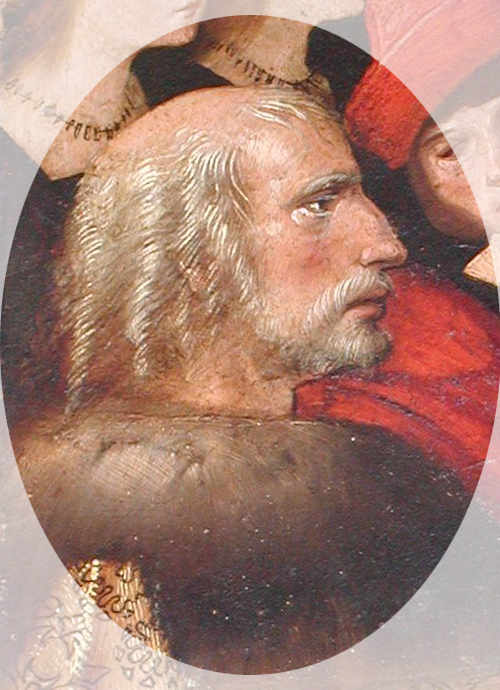
Remembering Christopher "Genocide" Columbus
"Well take this for what little it will profit you. As I look at you, Ambassador Mollari, I see a great hand reaching out of the stars. The hand is your hand. And I hear sounds. The sounds of billions of people calling your name."
"My followers?"
"Your victims."
— Elric, the Technomage, Babylon 5: A Geometry of Shadows
Friday, September 21, 2007
Petition President Bush to end violence in Darfur
Take action in this Amnesty International campaign to ask President Bush to:
* Set a timeline and benchmarks for the deployment of the African Union/UN peacekeeping force in Darfur;
* Protect displaced civilians in neighboring eastern Chad and support a UN presence there;
* Ensure sufficient support for African Union and UN peacekeepers to protect civilians and stabilize the region.
The global petition will be delivered to his office on October 24, which is United Nations Day.
* Set a timeline and benchmarks for the deployment of the African Union/UN peacekeeping force in Darfur;
* Protect displaced civilians in neighboring eastern Chad and support a UN presence there;
* Ensure sufficient support for African Union and UN peacekeepers to protect civilians and stabilize the region.
The global petition will be delivered to his office on October 24, which is United Nations Day.
Wednesday, September 12, 2007
Warren Buffett, notorious sponsor of genocide, reduces stake in Petrochina
The title is a bit satirical. However, Buffett is reducing his Petrochina stake. When you hold a huge number of shares, you don't go and sell off everything at one go, or you'll drive the share price down (see economics 101). You sell slowly.
He's cut his holdings from 10.16% of Petrochina's tradeable shares to 9.72%. It could be that he's just trimming his stake because the shares have appreciated. His next 3-4 quarterly filings could tell us whether he is continuing to sponsor genocide.
Like I said, though, the title is satirical. He may be indirectly profiting from genocide (be receiving dividends and capital gains), but he is NOT directly sponsoring it.
In related news, one US oil firm has exploited a legal loophole to operate in Sudan; they used a subsidiary incorporated outside the US and employing all non-US persons.
He's cut his holdings from 10.16% of Petrochina's tradeable shares to 9.72%. It could be that he's just trimming his stake because the shares have appreciated. His next 3-4 quarterly filings could tell us whether he is continuing to sponsor genocide.
Like I said, though, the title is satirical. He may be indirectly profiting from genocide (be receiving dividends and capital gains), but he is NOT directly sponsoring it.
In related news, one US oil firm has exploited a legal loophole to operate in Sudan; they used a subsidiary incorporated outside the US and employing all non-US persons.
Thursday, August 16, 2007
Did Warren Buffett prod China to act in Sudan?
David Weidner, writing for Marketwatch
Be it coincidence or by design, Buffett and Berkshire Hathaway Inc. sold a small stake in the Chinese oil company a few days before July 31, when the United Nations passed a groundbreaking resolution. The agreement authorizes a U.N. peacekeeping force of 26,000 to police Darfur. It's an agreement brokered largely by the support of China.
The police force is a small first step in the bid to end the violence, and the resolution authorizing it did not come easily. The Economist magazine reports that the West's efforts to pressure the Sudanese government largely have been ineffective.
"It is the Chinese ... who have really made this possible," the Economist reported on Aug. 2. "As the buyer of most of Sudan's oil, China has always been the key to imposing real pressure on the murdering government in Khartoum. For years it did nothing, reasoning that the best way to protect its commercial interests was to indulge the wishes of the regime in Khartoum at almost every turn."
Shortly before the Chinese about-face, Buffett and Berkshire Hathaway divested a small portion of PetroChina, 0.09%, or 16.9 million shares. For Buffett the capitalist, Berkshire sold PetroChina at $1.59 a share to claim proceeds of $26.87 million a price near the all-time high for the stock, according to reports.
Officials at Berkshire Hathaway did not return calls seeking comment, but Buffett has often talked about his investment in PetroChina.
"Berkshire Hathaway invested in PetroChina because it was cheap, not because it was China," Buffett the capitalist told a group of college students.
For Buffett the philanthropist, the divestment may have carried some symbolic meaning as well. In May, dissident shareholders criticized the PetroChina investment openly at the company's annual meeting in Omaha, Neb. They asked Buffett to divest; they were rebuffed. See earlier column on Buffett and PetroChina.
Change of heart
Fewer than two months later, Buffett pared his stake. It wasn't enough to send anyone at the oil ministry in Beijing into a panic, but it did get the attention of the media. The Chinese, hosts of the Olympic Games in less than a year, are feeling the growing intensity of the world's scrutiny. There are image problems: tainted toys, poisoned personal products, pollution, human rights and global warming, to name a few.
The country's strong connection to the Sudanese government has drawn criticism for good reason. The state oil company, China National Petroleum, is the parent of PetroChina and a partner with the Sudan for oil ventures there. Many top managers at PetroChina are executives of the state company, CNPC. Oil proceeds fund the Sudanese government's efforts there, along with the brutality, rape and torture.
Buffett the philanthropist must be disgusted. The man who pledged to give $40 billion to the Bill & Melinda Gates Foundation a year ago certainly would not tolerate a business that finances genocide.
The California Public Employees' Retirement System, or Calpers, has divested itself of PetroChina as have other university endowments and investors.
So he sends a message to Beijing: Look, I can sell and I will. You have a $30 billion oil giant, but how would the world react if the famous Warren Buffett cashes out a stake worth close to $3.3 billion?
A bad investment
Ultimately, Buffett the capitalist must have realized that investing in PetroChina was a bad idea. Funding the bloodshed and the relief don't make much economic sense.
The Gates' charity that will get a fortune from Buffett has spent millions aiding Sudanese refugees. In December, it pledged $1 million each to fund Save the Children and CARE there. UNICEF's immunization effort in Darfur, the International Medical Corps, the International Rescue Committee also are beneficiaries of the Buffett-backed foundation and that's just a few.
What if Buffett's divestment was simply profit-taking in a stock that was reaching new highs? What if he couldn't give a hoot about PetroChina, Darfur, Khartoum, the CNPC or genocide?
Then the stock sale and subsequent China-backed U.N. action are one time when luck for those at the top also means luck for those at the bottom. It also means Warren Buffett has created an enemy of his own image.
"Doing charity work is the opposite of investing we look for the most difficult problem to solve and the ones that have the lowest probability of success," Buffett told an audience.
The capitalist vs. the philanthropist. Who do you think will win?
Be it coincidence or by design, Buffett and Berkshire Hathaway Inc. sold a small stake in the Chinese oil company a few days before July 31, when the United Nations passed a groundbreaking resolution. The agreement authorizes a U.N. peacekeeping force of 26,000 to police Darfur. It's an agreement brokered largely by the support of China.
The police force is a small first step in the bid to end the violence, and the resolution authorizing it did not come easily. The Economist magazine reports that the West's efforts to pressure the Sudanese government largely have been ineffective.
"It is the Chinese ... who have really made this possible," the Economist reported on Aug. 2. "As the buyer of most of Sudan's oil, China has always been the key to imposing real pressure on the murdering government in Khartoum. For years it did nothing, reasoning that the best way to protect its commercial interests was to indulge the wishes of the regime in Khartoum at almost every turn."
Shortly before the Chinese about-face, Buffett and Berkshire Hathaway divested a small portion of PetroChina, 0.09%, or 16.9 million shares. For Buffett the capitalist, Berkshire sold PetroChina at $1.59 a share to claim proceeds of $26.87 million a price near the all-time high for the stock, according to reports.
Officials at Berkshire Hathaway did not return calls seeking comment, but Buffett has often talked about his investment in PetroChina.
"Berkshire Hathaway invested in PetroChina because it was cheap, not because it was China," Buffett the capitalist told a group of college students.
For Buffett the philanthropist, the divestment may have carried some symbolic meaning as well. In May, dissident shareholders criticized the PetroChina investment openly at the company's annual meeting in Omaha, Neb. They asked Buffett to divest; they were rebuffed. See earlier column on Buffett and PetroChina.
Change of heart
Fewer than two months later, Buffett pared his stake. It wasn't enough to send anyone at the oil ministry in Beijing into a panic, but it did get the attention of the media. The Chinese, hosts of the Olympic Games in less than a year, are feeling the growing intensity of the world's scrutiny. There are image problems: tainted toys, poisoned personal products, pollution, human rights and global warming, to name a few.
The country's strong connection to the Sudanese government has drawn criticism for good reason. The state oil company, China National Petroleum, is the parent of PetroChina and a partner with the Sudan for oil ventures there. Many top managers at PetroChina are executives of the state company, CNPC. Oil proceeds fund the Sudanese government's efforts there, along with the brutality, rape and torture.
Buffett the philanthropist must be disgusted. The man who pledged to give $40 billion to the Bill & Melinda Gates Foundation a year ago certainly would not tolerate a business that finances genocide.
The California Public Employees' Retirement System, or Calpers, has divested itself of PetroChina as have other university endowments and investors.
So he sends a message to Beijing: Look, I can sell and I will. You have a $30 billion oil giant, but how would the world react if the famous Warren Buffett cashes out a stake worth close to $3.3 billion?
A bad investment
Ultimately, Buffett the capitalist must have realized that investing in PetroChina was a bad idea. Funding the bloodshed and the relief don't make much economic sense.
The Gates' charity that will get a fortune from Buffett has spent millions aiding Sudanese refugees. In December, it pledged $1 million each to fund Save the Children and CARE there. UNICEF's immunization effort in Darfur, the International Medical Corps, the International Rescue Committee also are beneficiaries of the Buffett-backed foundation and that's just a few.
What if Buffett's divestment was simply profit-taking in a stock that was reaching new highs? What if he couldn't give a hoot about PetroChina, Darfur, Khartoum, the CNPC or genocide?
Then the stock sale and subsequent China-backed U.N. action are one time when luck for those at the top also means luck for those at the bottom. It also means Warren Buffett has created an enemy of his own image.
"Doing charity work is the opposite of investing we look for the most difficult problem to solve and the ones that have the lowest probability of success," Buffett told an audience.
The capitalist vs. the philanthropist. Who do you think will win?
Thursday, August 02, 2007
African Union/United Nations peacekeeping force to be deployed to Darfur
A joint AU/UN peacekeeping force is scheduled to be deployed to Darfur. However, that force won't get deployed without US support.
Go here to sign a petition by Amnesty International, calling on President Bush to support this deployment.
The Global Petition to End the Violence in Darfur
Dear President Bush:
We, the undersigned, are deeply concerned about the continued suffering of civilians in Darfur, Sudan, and eastern Chad. More than four years on, the conflict has led to some of the worst human rights abuses imaginable. Hundreds of thousands of civilians have been killed by deliberate and indiscriminate attacks, and more than 2.5 million civilians have been displaced.
Time is running out.
We therefore strongly urge you to use the authority of your office to:
Set a timeline and benchmarks for the deployment of the African Union/UN peacekeeping force in Darfur;
Protect displaced civilians in neighboring eastern Chad and support a UN presence there;
Ensure sufficient support for African Union and UN peacekeepers to protect civilians and stabilize the region.
We urge you to stand with other world leaders to actively work to protect human rights in Darfur today.
Go here to sign a petition by Amnesty International, calling on President Bush to support this deployment.
The Global Petition to End the Violence in Darfur
Dear President Bush:
We, the undersigned, are deeply concerned about the continued suffering of civilians in Darfur, Sudan, and eastern Chad. More than four years on, the conflict has led to some of the worst human rights abuses imaginable. Hundreds of thousands of civilians have been killed by deliberate and indiscriminate attacks, and more than 2.5 million civilians have been displaced.
Time is running out.
We therefore strongly urge you to use the authority of your office to:
Set a timeline and benchmarks for the deployment of the African Union/UN peacekeeping force in Darfur;
Protect displaced civilians in neighboring eastern Chad and support a UN presence there;
Ensure sufficient support for African Union and UN peacekeepers to protect civilians and stabilize the region.
We urge you to stand with other world leaders to actively work to protect human rights in Darfur today.
Sunday, June 17, 2007
What, exactly, is going on in Darfur?
This article is a little old, but as far as I know, little has changed. It shows the atrocities conducted by the Janjaweed, and the complicity of the Sudanese government. This is why shareholder action at companies that provide funds to Sudan are so important.
By Brian Steidle
Sunday, March 20, 2005; Page B02
Our helicopter touched down in a cloud of camel-brown sand, dust and plastic debris. As the cloud gradually settled into new layers on the bone-dry desert landscape, we could make out the faces of terrified villagers. "Welcome to Sudan," I murmured to myself, grabbing my pen and waterproof notebook.
A former Marine, I had arrived in Sudan's Darfur region in September 2004 as one of three U.S. military observers for the African Union, armed only with a pen, pad and camera. The mandate for the A.U. force allowed merely for the reporting of violations of a cease-fire that had been declared last April and the protection of observers. The observers sometimes joked morbidly that our mission was to search endlessly for the cease-fire we constantly failed to find. I soon realized that this was no joke.
The conflict had begun nearly 1 1/2 years earlier and had escalated into a full-scale government-sponsored military operation that, with the support of Arab militias known as the Janjaweed, was aimed at annihilating the African tribes in the region. And while the cease-fire was supposed to have put a stop to that, on an almost daily basis we would be called to investigate reports of attacks on civilians. We would find men, women and children tortured and killed, and villages burned to the ground.
The first photograph I took in Darfur was of a tiny child, Mihad Hamid. She was only a year old when I found her. Her mother had attempted to escape an onslaught from helicopter gunships and Janjaweed marauders that had descended upon her village of Alliet in October 2004. Carrying her daughter in a cloth wrapped around her waist, as is common in Sudan, Mihad's terrified mother had run from her attackers. But a bullet had rung out through the dry air, slicing through Mihad's flesh and puncturing her lungs. When I discovered the child, she was nestled in her mother's lap, wheezing in a valiant effort to breathe. With watery eyes, her mother lifted Mihad for me to examine.
Most Sudanese villagers assume that a khawadja -- a foreigner -- must be a doctor. And my frantic efforts to signal to her to lay her struggling daughter back down only convinced her that I had medical advice to dispense. It broke my heart to be able to offer her only a prayer and a glance of compassion, as I captured this casualty with my camera and notepad. I pledged, with the linguistic help of our team's Chadian mediator, that we would alert the aid organizations poised to respond.
"This is what they do," the mediator -- a neutral party to the conflict -- screamed at me. "This is what happens here! Now you know! Now you see!" I was unaware at that time that when the aid workers arrived the next day, amid continued fighting, they would never be able to locate Mihad.
Mihad now represents to me the countless victims of this vicious war, a war that we documented but given our restricted mandate were unable to stop. Every day we surveyed evidence of killings: men castrated and left to bleed to death, huts set on fire with people locked inside, children with their faces smashed in, men with their ears cut off and eyes plucked out, and the corpses of people who had been executed with gunshots to the head. We spoke with thousands of witnesses -- women who had been gang-raped and families that had lost fathers, people who plainly and soberly gave us their accounts of the slaughter.
Often we were the witnesses. Just two days after I had taken Mihad's photo, we returned to Alliet. While talking to a government commander on the outskirts of the town, we heard a buzz that sounded like a high-voltage power line. Upon entering the village, we saw that the noise was coming from flies swarming over dead animals and people. We counted about 20 dead, many burned, and then flew back to our camp to write our report. But the smell of charred flesh was hard to wash away.
The conflict in Darfur is not a battle between uniformed combatants, and it knows no rules of war. Women and children bear the greatest burden. The Internally Displaced Persons (IDP) camps are filled with families that have lost their fathers. Every day, women are sent outside the IDP camps to seek firewood and water, despite the constant risk of rape at the hands of the Janjaweed. Should men be available to venture out of the camps, they risk castration and murder. So families decide that rape is the lesser evil. It is a crime that families even have to make such a choice. Often women are sexually assaulted within the supposed safety of the IDP camps. Nowhere is really safe. If and when the refugees are finally able to return home and rebuild, many women may have to support themselves alone; rape victims are frequently ostracized, and others face unwanted pregnancies and an even greater burden of care.
The Janjaweed militias do not act alone. I have seen clear evidence that the atrocities committed in Darfur are the direct result of the Sudanese government's military collaboration with the militias. Attacks are well coordinated by Sudanese government officials and Arab militias, who attack villages together. Before these attacks occur, the cell phone systems are shut down by the government so that villagers cannot warn each other. Whenever we lost our phone service, we would scramble to identify the impending threat. We knew that somewhere, another reign of terror was about to begin.
Helicopter gunships belonging to the government routinely support the Arab militias on the ground. The gunships fire anti-personnel rockets that contain flechettes, or small nails, each with stabilizing fins on the back so the point hits the target first. Each gunship contains four rocket pods, each rocket pod contains about 20 rockets and each rocket contains about 500 of these flashettes. Flashette wounds look like shotgun wounds. I saw one small child's back that looked as if it had been shredded by a cheese grater. We got him to a hospital, but we did not expect him to live.
On many of the occasions we tried to investigate these attacks, we would find that fuel for our helicopters was mysteriously unavailable. We would receive unconvincing explanations from the Sudanese government's fuel company -- from "we are out of fuel" to "our fuel pumps are broken." At the same time, government helicopters continued to strafe villages unimpeded.
Those villagers who were able to escape flocked to existing IDP camps, where they would scrounge for sticks and plastic bags to construct shelter from the sun and wind. In even these desperate situations, however, the Sudanese government would not give up its murderous mission. First it would announce the need to relocate an IDP camp and assess the population of displaced people, often grossly underestimating the numbers. Then after international aid organizations had built a new, smaller camp, the government would forcibly relocate the population, leaving hundreds to thousands without shelter. It would bulldoze or drive over the old camps with trucks, often in the middle of the night in order to escape notice. It would then gather up and burn the remaining debris.
The worst thing I saw came last December, when Labado, a village of 20,000 people, was burned to the ground. We rushed there after a rebel group contacted us, and we arrived while the attack was still in progress. At the edge of the village, I found a Sudanese general who explained why he was doing nothing to stop the looting and burning. He said his job was to protect civilians and keep the road open to commercial traffic and denied that his men were participating in the attack. Then a group of uniformed men drove by in a Toyota Land Cruiser. The general said they were just going to get water, but they stopped about 75 yards away, jumped out, looted a hut and burned it. The attacks continued for a week. We have no idea how many people died there but tribal leaders later said close to 100 were missing.
Since I left Darfur last month, I have tried, in press conferences, newspaper interviews and congressional testimony, to publicize conditions there in the hope that the international community will intervene more vigorously instead of watching the atrocities run their course. That way we won't look back years from now and ask why we didn't stop another genocide.
I believe this conflict can be resolved through international pressure and international support of the African Union. Weapons sanctions and a no-fly zone throughout Darfur are critical. I have seen that the mere presence of A.U. forces can discourage attacks and, with more support, they could stop the conflict.
In December, the Sudanese general at Labado had told us that his mission was to continue clearing the route all the way to Khartoum, hundreds of miles away. The next town in line was Muhajeryia, roughly twice the size of Labado. The African Union placed 35 soldiers into Muhajeryia, not to protect the village, but to protect the civilian contractors who were establishing a base camp. Yet this small force alone was able to deter the government of Sudan, with a force of a few thousand soldiers and Janjaweed militiamen, from attacking. Shortly after that, the A.U. was able to deploy 70 more soldiers from the protection force and 10 military observers to the scorched village of Labado. Within one week, approximately 3,000 people returned to rebuild. In addition, the A.U. negotiated the withdrawal of Sudanese government troops from the area.
To secure and protect all villages in Darfur, the African Union needs several things: an expanded mandate that would allow it to protect civilians and ensure secure routes for humanitarian aid, advanced logistics and communication support, and an increase in the size of the protection force by tens of thousands.
The attention paid to Darfur in Congress and at the United Nations hasn't been enough. For the first time, we might be able to stop genocide in the making. We must not fail the men, women and children of Darfur.
During my time in Darfur, as I listened to the victims, I was astounded at their composure. Their unwavering faith provides some rationale to what seems to me an inexplicable horror. By handing over their lives to God, somehow each day is a gift, despite the massacres. "We're going to die," they acknowledge with fear, "but we hope to survive . . . Inshallah [God willing]." Unfortunately, they just don't have a choice.
We do.
Author's e-mail:
steidlebs@globalgrassrootsnetwork.org
Brian Steidle, who served four years in the U.S. Marine Corps, recently spent six months working for a State Department contractor as a cease-fire monitor with the African Union force in Sudan's Darfur region. His sister, Gretchen Steidle Wallace, assisted in the writing of this piece.
By Brian Steidle
Sunday, March 20, 2005; Page B02
Our helicopter touched down in a cloud of camel-brown sand, dust and plastic debris. As the cloud gradually settled into new layers on the bone-dry desert landscape, we could make out the faces of terrified villagers. "Welcome to Sudan," I murmured to myself, grabbing my pen and waterproof notebook.
A former Marine, I had arrived in Sudan's Darfur region in September 2004 as one of three U.S. military observers for the African Union, armed only with a pen, pad and camera. The mandate for the A.U. force allowed merely for the reporting of violations of a cease-fire that had been declared last April and the protection of observers. The observers sometimes joked morbidly that our mission was to search endlessly for the cease-fire we constantly failed to find. I soon realized that this was no joke.
The conflict had begun nearly 1 1/2 years earlier and had escalated into a full-scale government-sponsored military operation that, with the support of Arab militias known as the Janjaweed, was aimed at annihilating the African tribes in the region. And while the cease-fire was supposed to have put a stop to that, on an almost daily basis we would be called to investigate reports of attacks on civilians. We would find men, women and children tortured and killed, and villages burned to the ground.
The first photograph I took in Darfur was of a tiny child, Mihad Hamid. She was only a year old when I found her. Her mother had attempted to escape an onslaught from helicopter gunships and Janjaweed marauders that had descended upon her village of Alliet in October 2004. Carrying her daughter in a cloth wrapped around her waist, as is common in Sudan, Mihad's terrified mother had run from her attackers. But a bullet had rung out through the dry air, slicing through Mihad's flesh and puncturing her lungs. When I discovered the child, she was nestled in her mother's lap, wheezing in a valiant effort to breathe. With watery eyes, her mother lifted Mihad for me to examine.
Most Sudanese villagers assume that a khawadja -- a foreigner -- must be a doctor. And my frantic efforts to signal to her to lay her struggling daughter back down only convinced her that I had medical advice to dispense. It broke my heart to be able to offer her only a prayer and a glance of compassion, as I captured this casualty with my camera and notepad. I pledged, with the linguistic help of our team's Chadian mediator, that we would alert the aid organizations poised to respond.
"This is what they do," the mediator -- a neutral party to the conflict -- screamed at me. "This is what happens here! Now you know! Now you see!" I was unaware at that time that when the aid workers arrived the next day, amid continued fighting, they would never be able to locate Mihad.
Mihad now represents to me the countless victims of this vicious war, a war that we documented but given our restricted mandate were unable to stop. Every day we surveyed evidence of killings: men castrated and left to bleed to death, huts set on fire with people locked inside, children with their faces smashed in, men with their ears cut off and eyes plucked out, and the corpses of people who had been executed with gunshots to the head. We spoke with thousands of witnesses -- women who had been gang-raped and families that had lost fathers, people who plainly and soberly gave us their accounts of the slaughter.
Often we were the witnesses. Just two days after I had taken Mihad's photo, we returned to Alliet. While talking to a government commander on the outskirts of the town, we heard a buzz that sounded like a high-voltage power line. Upon entering the village, we saw that the noise was coming from flies swarming over dead animals and people. We counted about 20 dead, many burned, and then flew back to our camp to write our report. But the smell of charred flesh was hard to wash away.
The conflict in Darfur is not a battle between uniformed combatants, and it knows no rules of war. Women and children bear the greatest burden. The Internally Displaced Persons (IDP) camps are filled with families that have lost their fathers. Every day, women are sent outside the IDP camps to seek firewood and water, despite the constant risk of rape at the hands of the Janjaweed. Should men be available to venture out of the camps, they risk castration and murder. So families decide that rape is the lesser evil. It is a crime that families even have to make such a choice. Often women are sexually assaulted within the supposed safety of the IDP camps. Nowhere is really safe. If and when the refugees are finally able to return home and rebuild, many women may have to support themselves alone; rape victims are frequently ostracized, and others face unwanted pregnancies and an even greater burden of care.
The Janjaweed militias do not act alone. I have seen clear evidence that the atrocities committed in Darfur are the direct result of the Sudanese government's military collaboration with the militias. Attacks are well coordinated by Sudanese government officials and Arab militias, who attack villages together. Before these attacks occur, the cell phone systems are shut down by the government so that villagers cannot warn each other. Whenever we lost our phone service, we would scramble to identify the impending threat. We knew that somewhere, another reign of terror was about to begin.
Helicopter gunships belonging to the government routinely support the Arab militias on the ground. The gunships fire anti-personnel rockets that contain flechettes, or small nails, each with stabilizing fins on the back so the point hits the target first. Each gunship contains four rocket pods, each rocket pod contains about 20 rockets and each rocket contains about 500 of these flashettes. Flashette wounds look like shotgun wounds. I saw one small child's back that looked as if it had been shredded by a cheese grater. We got him to a hospital, but we did not expect him to live.
On many of the occasions we tried to investigate these attacks, we would find that fuel for our helicopters was mysteriously unavailable. We would receive unconvincing explanations from the Sudanese government's fuel company -- from "we are out of fuel" to "our fuel pumps are broken." At the same time, government helicopters continued to strafe villages unimpeded.
Those villagers who were able to escape flocked to existing IDP camps, where they would scrounge for sticks and plastic bags to construct shelter from the sun and wind. In even these desperate situations, however, the Sudanese government would not give up its murderous mission. First it would announce the need to relocate an IDP camp and assess the population of displaced people, often grossly underestimating the numbers. Then after international aid organizations had built a new, smaller camp, the government would forcibly relocate the population, leaving hundreds to thousands without shelter. It would bulldoze or drive over the old camps with trucks, often in the middle of the night in order to escape notice. It would then gather up and burn the remaining debris.
The worst thing I saw came last December, when Labado, a village of 20,000 people, was burned to the ground. We rushed there after a rebel group contacted us, and we arrived while the attack was still in progress. At the edge of the village, I found a Sudanese general who explained why he was doing nothing to stop the looting and burning. He said his job was to protect civilians and keep the road open to commercial traffic and denied that his men were participating in the attack. Then a group of uniformed men drove by in a Toyota Land Cruiser. The general said they were just going to get water, but they stopped about 75 yards away, jumped out, looted a hut and burned it. The attacks continued for a week. We have no idea how many people died there but tribal leaders later said close to 100 were missing.
Since I left Darfur last month, I have tried, in press conferences, newspaper interviews and congressional testimony, to publicize conditions there in the hope that the international community will intervene more vigorously instead of watching the atrocities run their course. That way we won't look back years from now and ask why we didn't stop another genocide.
I believe this conflict can be resolved through international pressure and international support of the African Union. Weapons sanctions and a no-fly zone throughout Darfur are critical. I have seen that the mere presence of A.U. forces can discourage attacks and, with more support, they could stop the conflict.
In December, the Sudanese general at Labado had told us that his mission was to continue clearing the route all the way to Khartoum, hundreds of miles away. The next town in line was Muhajeryia, roughly twice the size of Labado. The African Union placed 35 soldiers into Muhajeryia, not to protect the village, but to protect the civilian contractors who were establishing a base camp. Yet this small force alone was able to deter the government of Sudan, with a force of a few thousand soldiers and Janjaweed militiamen, from attacking. Shortly after that, the A.U. was able to deploy 70 more soldiers from the protection force and 10 military observers to the scorched village of Labado. Within one week, approximately 3,000 people returned to rebuild. In addition, the A.U. negotiated the withdrawal of Sudanese government troops from the area.
To secure and protect all villages in Darfur, the African Union needs several things: an expanded mandate that would allow it to protect civilians and ensure secure routes for humanitarian aid, advanced logistics and communication support, and an increase in the size of the protection force by tens of thousands.
The attention paid to Darfur in Congress and at the United Nations hasn't been enough. For the first time, we might be able to stop genocide in the making. We must not fail the men, women and children of Darfur.
During my time in Darfur, as I listened to the victims, I was astounded at their composure. Their unwavering faith provides some rationale to what seems to me an inexplicable horror. By handing over their lives to God, somehow each day is a gift, despite the massacres. "We're going to die," they acknowledge with fear, "but we hope to survive . . . Inshallah [God willing]." Unfortunately, they just don't have a choice.
We do.
Author's e-mail:
steidlebs@globalgrassrootsnetwork.org
Brian Steidle, who served four years in the U.S. Marine Corps, recently spent six months working for a State Department contractor as a cease-fire monitor with the African Union force in Sudan's Darfur region. His sister, Gretchen Steidle Wallace, assisted in the writing of this piece.
Monday, June 04, 2007
Charles Taylor boycotts opening of his war crimes trial
MIKE CORDER
Associated Press
THE HAGUE, Netherlands – Former Liberian President Charles Taylor boycotted the opening of his war crimes trial and his assigned lawyer walked out of the courtroom in a dramatic opening to the landmark first international tribunal of a former African leader.
Lawyer Karim Khan said Taylor had fired him and wanted to act has his own defence attorney. Khan walked out even though Presiding Judge Julia Sebutinde of Uganda repeatedly directed him to continue to represent Taylor, if only for the opening day.
Apologizing and defying threats of contempt of court, Khan gathered his files and left the room.
"This is not defence counsel making some cheap trick," Khan told The Associated Press outside the courtroom. Taylor "thought this was a railroad to a conviction and in those circumstances, he exercised his right to terminate my representation and to represent himself."
The court ordered the trial to continue, and Chief Prosecutor Stephen Rapp began outlining the horrors inflicted on Sierra Leone villagers by forces allegedly under Taylor's control.
The attackers would randomly murder people and enslave others to use as fighters, miners and farmers, Rapp said. Then "the attackers would mutilate – amputating arms, limbs, gouging eyes. Children conscripted by the attackers killing their own parents," he added.
Taylor, 59, has pleaded not guilty to 11 charges of war crimes and crimes against humanity. The court has no death sentence and no maximum sentence if he is convicted.
The prosecution was making a four-hour opening statement Monday, after which the case was to adjourn for three weeks. It was unclear who would be sitting on the defence bench when it resumes June 25. The trial was expected to last 18 months.
Taylor was not in court Monday, but in a letter read to judges by Khan, he claimed he had been prevented from seeing a court official mandated with making sure he is properly defended and that his one court-appointed attorney was heavily outgunned by the prosecution team of nine.
"At one time I had confidence in this court's ability to dispense justice. Over time, it has become clear that confidence has been misplaced," Taylor's statement said. "I will not receive a fair trial."
Taylor's supporters say he has been unfairly targeted by prosecutors and that his defence team has not had enough time to prepare. "He's taking the blame for what others did," said his daughter, Charen Taylor, who grew up in the United States and dropped out of college to help organize his defence.
Rapp told the court Taylor had been assigned a lawyer, assistant attorneys, a special investigator and court funds.
Sebutinde, the presiding judge, repeatedly interrupted Khan's reading of Taylor's letter, demanding a to-the-point explanation for Taylor's absence.
"We are not interested in political speeches," she told the lawyer.
The trial had been expected to be difficult and complex even before Monday's developments raised more questions about how the process would work. Despite the difficulties, though, the trial has been hailed as a watershed for war-torn western Africa.
"It's a time in the history of Africa that the leaders ... go on notice that they just cannot destroy their own people for whatever purpose," said David Crane, a former chief prosecutor at the Special Court for Sierra Leone.
The atrocities in Sierra Leone's 1991-2002 civil war are well documented. Fighters – often children drugged and turned into merciless killers at brutal rebel training camps – murdered thousands of men, women and children and mutilated more by hacking off hands and limbs with axes and machetes. Women were raped and abducted to become sex slaves.
Many victims had the initials of rebel groups carved into their skin with burning-hot bayonets. Children were sent out with burlap bags to hack off and collect limbs and were punished if the bags were not full when they returned.
When witnesses begin testifying, survivors, including amputees, will take the stand along with former allies from Taylor's inner sanctum who will be critical to proving he controlled rebels responsible for atrocities in another country.
Many will testify anonymously for fears of reprisals from Taylor supporters, and some will be put in witness protection schemes after giving evidence.
"Prosecutors will have to prove that the linkage exists between Taylor's alleged participation in the crimes and the crimes themselves," said Elise Keppler of Human Rights Watch. "There is no question these kinds of cases are difficult, they are complex."
While the charges he faces refer to events in Sierra Leone, Liberia's neighbour, Taylor also is linked to brutality in his own country.
At the Liberian capital's largest cemetery, where most of the tombstone dates are from the period of the country's 14-year civil war, four gravediggers listened to radio reports of the start of Taylor's trial Monday.
One gravedigger, Flomo Tokpah, 54, said his older brother was killed by Taylor's forces, and that he was glad Taylor did not address the court himself.
"I don't want to hear that wicked man's voice anymore," he said.
But his co-worker, Teddy Taweh, 42, said Taylor "should face the court and tell people why he did what he did."
From 1989 to 1997, Taylor led the rebel National Patriotic Front of Liberia, whose aim was to unseat then-president Samuel K. Doe. Taylor is believed to be one of the first warlords to recruit children, who were organized into a Small Boys Unit and christened with names like "Babykiller." Taylor was elected Liberia's president in 1997.
Taylor was indicted in 2003, accused of sponsoring Sierra Leone's rebel Revolutionary United Front in exchange for diamonds. Taylor agreed to give up power and go into exile, but was arrested in Nigeria in March 2006.
He was transferred to The Hague a year ago amid fears his trial in Sierra Leone could trigger fresh violence in the region. His trial will take place in a courtroom rented from the International Criminal Court by the U.N.-backed court that usually sits in Sierra Leone and was established to try those held most responsible for the Sierra Leonean war.
Sunday, May 27, 2007
Sunday, May 20, 2007
Petrochina and CNPC - separate entities or not?
Many have argued that Petrochina has no ties to the Sudan genocide. It is China National Petroleum Corporation that has the oil operations in Sudan, which provide revenue to the Sudanese government, which funds the Janjaweed militia. Petrochina is a subsidiary, with no influence over the operations of its parent.
However, the Sudan Divestment Task Force has a PDF here that argues differently. The two corporations share management, and have frequently transferred assets. They may be incorporated separately, but the Task Force makes the case that we should see them as the same company.
Petrochina's 2006 SEC Form 20-F states:
The Task Force reports that:
In addition, many of the executives in both companies have close ties to the Chinese government. Many Westerners view such ties negatively. The practice is more commmon in Asian countries. The Task Force isn't trying to debate good corporate governance, though. It's trying to tell us that China has looked the other way, and that if we divest from CNPC/Petrochina, we create pressure on the Chinese government.
Moving on, the Task Force highlights the fluidity of asset transfers between the two companies.
Additionally, Petrochina has sold assets to and bought assets from CNPC. Financial information for the assets traded was not publically available. Petrochina places much of its available cash on hand with a finance company owned by CNPC, which may loan it out to other CNPC subsidiaries. Petrochina has a number of unsecured, below market rate loans from China Petroleum Finance Company, which I just referred to. These can be construed as cross subsidies. The Task Force reports that Petrochina did take on debt from CNPC when it was IPOed, but as I understand it, this is a fairly common practice when Western companies make spin-offs.
So, basically, it would not be far wrong to think of Petrochina and CNPC as one company, or at least two companies with substantial overlap. If these had been US companies, Petrochina would probably have much greater distance from CNPC, and then Buffett's argument would have much greater weight. However, these aren't US companies (and anyway, if they were, I still wouldn't invest in Petrochina).
As I understand it, Fidelity has divested 91% of its shares in Petrochina, including all its US ADR shares (these trade on US stock exchanges). They have yet to finish divesting their Petrochina shares held on foreign exchanges.
However, the Sudan Divestment Task Force has a PDF here that argues differently. The two corporations share management, and have frequently transferred assets. They may be incorporated separately, but the Task Force makes the case that we should see them as the same company.
Petrochina's 2006 SEC Form 20-F states:
“CNPC owns approximately 88.21% of our share capital. This ownership percentage enables CNPC to
elect our entire board of directors without the concurrence of any of our other shareholders. Accordingly,
CNPC is in a position to... control our policies, management and affairs...”
The Task Force reports that:
...CNPC has
appointed a PetroChina Board that is nearly indistinguishable from CNPC. The
PetroChina Board is comprised of 13 Directors (of which one Directorship position is
currently unfilled), only three of which are independent (and one of the three independent
Directors is tied to the Chinese government).108 Eight out of the nine current non-
independent Directors of the Board have a current or former connection to CNPC. The
Board’s Chairman is the immediate past President of CNPC and the Board’s Vice-
Chairman is the current President of CNPC. Furthermore, CNPC’s Chief Financial Officer
and four out of five CNPC Vice Presidents also serve as Directors on PetroChina’s Board.
The only CNPC Vice President that doesn’t serve on PetroChina’s Board is, instead, a
Vice President at PetroChina.109 These elaborate but confusing relationships are visually
laid out in the Appendix immediately following this report.
In addition, many of the executives in both companies have close ties to the Chinese government. Many Westerners view such ties negatively. The practice is more commmon in Asian countries. The Task Force isn't trying to debate good corporate governance, though. It's trying to tell us that China has looked the other way, and that if we divest from CNPC/Petrochina, we create pressure on the Chinese government.
Moving on, the Task Force highlights the fluidity of asset transfers between the two companies.
The history of the CNPC-PetroChina relationship begins in 1999 with CNPC’s failed
attempt at an initial public offering (IPO) on the New York Stock Exchange (NYSE). At the
time, “Western investor concerns about [CNPC’s] operations in Sudan forced the
company to scrap its initial IPO plans and instead carve out and offer a subsidiary,
PetroChina, to the public which CNPC pledged would not be involved in Sudan
activities.” Today, CNPC owns 88.21% of PetroChina’s shares with the rest available to
outside investors. At the time of its IPO application, CNPC’s promise to maintain an
absolute firewall between PetroChina and CNPC’s Sudan assets was met with skepticism
by many US investors, who pointed out that any revenue generated by PetroChina for
CNPC (for example, in the form of dividend payments) was inherently fungible and could
therefore be used, even if indirectly, to fund CNPC’s Sudan operations. One noted analyst
[Editor: a political risk analyst] claimed that the only way the firewall could work “is for CNPC to get out of Sudan” and
another referred to the firewall as “a smoke screen.” The fears of the skeptics were soon
confirmed. When “PetroChina was offered to the public, it incurred $15 billion in debt from
CNPC, some of which was acquired in connection with CNPC’s Sudan operations.” In
addition, analysts at the time estimated “that some US$270-US$300 million of
PetroChina’s [IPO], about ten per cent of the total, went directly to CNPC – and this was
new money that could be included in CNPC’s new investment in the Eastern Upper Nile
[the area where Petrodar operates].”
Since the public offering, there have been dozens more asset transfers between
PetroChina and CNPC, all executed under a non-competition agreement jointly signed by
the companies at the time of PetroChina’s IPO.
Additionally, Petrochina has sold assets to and bought assets from CNPC. Financial information for the assets traded was not publically available. Petrochina places much of its available cash on hand with a finance company owned by CNPC, which may loan it out to other CNPC subsidiaries. Petrochina has a number of unsecured, below market rate loans from China Petroleum Finance Company, which I just referred to. These can be construed as cross subsidies. The Task Force reports that Petrochina did take on debt from CNPC when it was IPOed, but as I understand it, this is a fairly common practice when Western companies make spin-offs.
So, basically, it would not be far wrong to think of Petrochina and CNPC as one company, or at least two companies with substantial overlap. If these had been US companies, Petrochina would probably have much greater distance from CNPC, and then Buffett's argument would have much greater weight. However, these aren't US companies (and anyway, if they were, I still wouldn't invest in Petrochina).
As I understand it, Fidelity has divested 91% of its shares in Petrochina, including all its US ADR shares (these trade on US stock exchanges). They have yet to finish divesting their Petrochina shares held on foreign exchanges.
Sunday, May 06, 2007
Warren Buffett, Petrochina, and Sudan part 2
A resolution that would require Berkshire Hathaway, run by Warren Buffett, to divest its stake in Petrochina, was handily defeated at the shareholders' meeting, receiving only 2% of the vote. Petrochina's parent company, China National Petroleum Corp, has a significant stake in oil production in Sudan, whose royalties fund the Sudanese government. The Sudanese government has directly funded the Janjaweed militia groups. Buffett argued that a) Petrochina has no influence over the behavior of its parent, b) and that if CNPC were to have to divest its stake in Petrodar, it would be selling that at a discount to the Sudanese government, resulting in a windfall for the latter.
It's true that Asian corporations are less more responsive than Western ones to shareholder engagement on such issues. Buffett, to his credit, allowed 45 minutes' discussion on Sudan alone, and invited non-shareholders to the meeting for this issue. And Petrochina is not directly involved in genocide. He does raise excellent points.
However, he and Charlie Munger discussed the company's lack of investment in gambling companies, which can be very profitable.
I feel better about gambling companies than about Petrochina. Gambling is a dirty business; I once heard a friend describe how she went to a casino just for food, and sat next to someone at the restaurant who had just gambled his kids' college funds away. However, that doesn't compare to genocide.
Wall Street is, frankly, notorious for compartmentalizing. A common response to socially-responsible investing is, "Why not just invest normally, and donate the rest to charity?" Ken Heebner, who runs the CGM Focus fund, said "Schlumberger isn't saying to the Chinese, "We need to know more about your human-rights policies before we take your money.""
One of the that Jesus did for us when He came was to stretch our perceptions of who was our neighbor. We humans are short-sighted. For example, it can be difficult for us to acknowledge how our consumption patterns are harming people in far-away places. This is especially true if we have financial incentive to maintain our consumption patterns: cheap clothes, cheap coffee, cheap chocolate ... or good investments in Sudan.
The exact program on the Day of Judgment is pure speculation. Frankly, I'm not always convinced there is going to be one. However, if there is, I speculate that God will expand our conscisounesses, and show us all the hidden ways we have harmed one another. I imagine Warren Buffett will have to answer to God on that day. He won't be alone, mind you - I want to look good, and I more or less have to buy clothes made under slave-labor conditions. I could get everything tailored, but that begs the question of where the cloth comes from.
However, as I mentioned earlier, a Fortune magazine article suggests another course of action: talk to Petrochina. Ask them to use their influence to get Sudan to allow peacekeepers in. He has a responsibility to his shareholders. His shareholders have a responsibility to demand this of him.
It's true that Asian corporations are less more responsive than Western ones to shareholder engagement on such issues. Buffett, to his credit, allowed 45 minutes' discussion on Sudan alone, and invited non-shareholders to the meeting for this issue. And Petrochina is not directly involved in genocide. He does raise excellent points.
However, he and Charlie Munger discussed the company's lack of investment in gambling companies, which can be very profitable.
Gambling stocks have seen some nice returns over the past year, whether you're talking about MGM (NYSE: MGM), Wynn (Nasdaq: WYNN), or Las Vegas Sands (NYSE: LVS). One shareholder asked the dynamic duo whether gambling would continue to be a good business.
Buffett figured the industry will have a great future as long as gambling continues to be legal. He said the human desire to gamble is huge and cited how much more exciting a football game, even a boring one, can become just by betting a few dollars on it. Therefore, he believes, the easier it is for people to gamble, the better the gambling industry will do.
As for his personal feelings on the industry, Buffett calls gambling a "tax on ignorance," with the "ignorant" defined as people who continue to put their money on the line when the odds are against them.
Munger followed up: "It's a dirty business, and you won't soon find a casino in Berkshire Hathaway."
I feel better about gambling companies than about Petrochina. Gambling is a dirty business; I once heard a friend describe how she went to a casino just for food, and sat next to someone at the restaurant who had just gambled his kids' college funds away. However, that doesn't compare to genocide.
Wall Street is, frankly, notorious for compartmentalizing. A common response to socially-responsible investing is, "Why not just invest normally, and donate the rest to charity?" Ken Heebner, who runs the CGM Focus fund, said "Schlumberger isn't saying to the Chinese, "We need to know more about your human-rights policies before we take your money.""
One of the that Jesus did for us when He came was to stretch our perceptions of who was our neighbor. We humans are short-sighted. For example, it can be difficult for us to acknowledge how our consumption patterns are harming people in far-away places. This is especially true if we have financial incentive to maintain our consumption patterns: cheap clothes, cheap coffee, cheap chocolate ... or good investments in Sudan.
The exact program on the Day of Judgment is pure speculation. Frankly, I'm not always convinced there is going to be one. However, if there is, I speculate that God will expand our conscisounesses, and show us all the hidden ways we have harmed one another. I imagine Warren Buffett will have to answer to God on that day. He won't be alone, mind you - I want to look good, and I more or less have to buy clothes made under slave-labor conditions. I could get everything tailored, but that begs the question of where the cloth comes from.
However, as I mentioned earlier, a Fortune magazine article suggests another course of action: talk to Petrochina. Ask them to use their influence to get Sudan to allow peacekeepers in. He has a responsibility to his shareholders. His shareholders have a responsibility to demand this of him.
Wednesday, April 18, 2007
More on China and Darfur
Sudan's Foreign Minister announced that he had approved a "heavy support" package for the existing African Union peacekeeping force. The existing force is only about 7800 people, and does not have authorization to use military force to defend civilians. National sovereignty is a cardinal concept of the UN, and nations must almost always approve a peacekeeping force being sent in. Sudan has so far resisted, but it seems the Chinese may have pressured them. Read the Xinhua report, dated yesterday, here. And, of course, continue to pray.
Tuesday, April 17, 2007
Warren Buffett, PetroChina, and Sudan
I previously mentioned Warren Buffett as a capitalist with a good heart. He very, very good at making money, but he doesn't seem all that interested in having a lot of it, having given most of his wealth away.
He still runs Berkshire Hathaway, an insurance conglomerate that collects insurance premiums and invests in publicly traded companies, and companies that are bought outright. In light of the continuing genocide in Sudan, one of those investments is potentially problematic: Petrochina.
According to Marc Gunther at a Fortune article posted on CNN, Berkshire Hathaway owns 2.3 billion shares of Petrochina, a subsidiary of China National Petroleum Corporation (CNPC), which is 88% state-owned.
CNPC has significant operations in Sudan, and a major stake in Sudan's national oil consortium. 70-80% of Sudan's oil revenues go to its military, which is linked with the Janjaweed militia, the ones conducting the genocide in Darfur. China also gives Sudan weapons and political backing.
Petrochina isn't a black and white issue, although it is well on the side of black. The Sudan Divestment Task Force says that China's oil assets in Sudan are "an undeniable and well-documented enabler of Khartoum's genocidal policy in Darfur." Additionally, China has stalled UN Security Council votes by (of all people) the US and the UK to apply stricter sanctions to Darfur. Already, 2-400,000 people have been killed, and millions have been displaced. And rape has been used as a weapon of war by the militia.
Harvard University rarely does this, but its endowment has divested its stake in Petrochina. They believe the case for divestment is "persuasive." The public outcry surrounding divestment campaigns can shame companies into changing their behavior. Additionally, concerned shareholders can bring their concerns to management.
However, even companies based in democracies are not required to listen or act on shareholder concerns. No board or CEO has been ousted because the company does business with a tyrannical or genocidal regime. And China is no democracy. The government is completely unconcerned with the welfare of the Darfurians.
However, the Chinese government is not invulnerable to pressure. Gunther writes,
In any case, prayers are due for the leaders of China.
He still runs Berkshire Hathaway, an insurance conglomerate that collects insurance premiums and invests in publicly traded companies, and companies that are bought outright. In light of the continuing genocide in Sudan, one of those investments is potentially problematic: Petrochina.
According to Marc Gunther at a Fortune article posted on CNN, Berkshire Hathaway owns 2.3 billion shares of Petrochina, a subsidiary of China National Petroleum Corporation (CNPC), which is 88% state-owned.
CNPC has significant operations in Sudan, and a major stake in Sudan's national oil consortium. 70-80% of Sudan's oil revenues go to its military, which is linked with the Janjaweed militia, the ones conducting the genocide in Darfur. China also gives Sudan weapons and political backing.
Petrochina isn't a black and white issue, although it is well on the side of black. The Sudan Divestment Task Force says that China's oil assets in Sudan are "an undeniable and well-documented enabler of Khartoum's genocidal policy in Darfur." Additionally, China has stalled UN Security Council votes by (of all people) the US and the UK to apply stricter sanctions to Darfur. Already, 2-400,000 people have been killed, and millions have been displaced. And rape has been used as a weapon of war by the militia.
Harvard University rarely does this, but its endowment has divested its stake in Petrochina. They believe the case for divestment is "persuasive." The public outcry surrounding divestment campaigns can shame companies into changing their behavior. Additionally, concerned shareholders can bring their concerns to management.
However, even companies based in democracies are not required to listen or act on shareholder concerns. No board or CEO has been ousted because the company does business with a tyrannical or genocidal regime. And China is no democracy. The government is completely unconcerned with the welfare of the Darfurians.
However, the Chinese government is not invulnerable to pressure. Gunther writes,
To his credit, Buffett has responded publicly (his response is available for download here, as a PDF file) to the divestment campaign and he has welcomed debate at the annual meeting - although he is under no obligation to do so. This is in contrast to Fidelity Investments, which remains a target of a divestment drive.
In Buffett's response, he argues, first, that PetroChina itself has no holdings in Sudan and that it does not control CNPC. "Subsidiaries have no ability to control the policies of their parent," he says.
He goes on to say that CNPC cannot "withdraw" its assets from Sudan since its assets consist of oil in the ground and the fixed infrastructure to transport and refine it. Should China sell those assets to the Sudanese government, the government would still be able to sell its oil on the world market. "Proponents of the Chinese government's divesting should then ask the most important question in economics, 'And then what?'" Buffett writes.
It's a fair question. Here are two possible answers. The first is that Sudan would try to buy out the Chinese, although the Khartoum government is already in deep debt. A second possibility is that other major investors in Sudan's oil, the state-owned oil companies of Malaysia and India, would step in. Either way, severing the economic ties between China and Sudan would have a significant benefit. As the Sudan Divestment Task Forces writes in response to Berkshire's response:
"The sale of CNPC's Sudan assets would remove China's economic incentive to enable Sudan's ongoing genocide. Even short of forcing divestiture of its Sudan assets, pressure on CNPC is likely to change China's approach towards Sudan diplomacy, especially given how highly China prizes its Sudan oil assets."
In truth, China is unlikely to divest, even under pressure from Berkshire. But the Chinese have shown lately that they may be vulnerable to pressure. A high-ranking Chinese official recently traveled to Darfur and urged the Sudanese government to accept a United Nations peacekeeping force. He appears to have done so after Hollywood activists - notably Mia Farrow - threatened to link the 2008 Beijing Olympics to the genocide. Film director Steven Spielberg, who is making a movie about the Olympics, also condemned the genocide in a letter to President Hu Jintao of China.
So Buffett could, at a minimum, engage in discussions with PetroChina. He could ask that PetroChina and CNPC to use their influence to ask Sudan to allow in peacekeepers. He could speak to the Indians and the Malaysians and ask them to work with him. If all of that fails, he could then sell the stock - noisily.
Warren Buffett is, after all, much more than one of the world's great investors. He is a decent, generous man of unquestioned integrity. When he speaks, much of the world listens. He now has a platform to speak on behalf of victims of genocide. Why not take it?
In any case, prayers are due for the leaders of China.
Friday, February 16, 2007
Citizens Funds (a Socially Responsible Investing firm): inquiries on activities in Sudan
Citizens Funds is an SRI firm which invests only in companies that pass social and environmental screens. SRI is a growing trend worldwide. SRI firms will exclude companies that fail their screens, will engage as shareholders with companies to improve their social and environmental responsiveness, and will sometimes make investments targeted at low-income communities with low access to credit.
Many Americans are concerned with the genocide in Sudan, as they should be. Fidelity has blatantly refused to engage their clients and their fund shareholders who have demanded that they cease investment in companies that enable the genocide by providing funds (usually through oil royalties) to the government. They didn't answer my email, not even with a form letter.
Citizens, on the other hand, has queryed companies it believes may derive some revenues from Sudanese operations. The following companies have responded to their requests for information:
3M (Ticker MMM, diversified industrial)
Metlife (ticker MET, insurance)
Bank of New York (BNY, does what you think it does)
Ingersoll-Rand (IR, industrial machinery)
Baker Hughes (BHI, oil exploration)
Mellon Financial (MEL, financial)
Northern Trust (NTRS, financial)
Pepsico (PEP, you know what they sell)
Coke (KO, you know what they sell, too)
Volvo (VOLVY, sells automobiles and trucks)
Medtronic (MDT, medical devices)
Stryker (SYK, orthopedic devices)
Toyota (TM, cars, including the Prius, which I want someday)
Citizens has argued that instant divestment would deprive them of the ability to engage the companies as shareholders. Yes, it's a one dollar, one vote sort of deal, and there are firms out there that are a lot larger than Citizens. But the best companies do listen to their shareholders' concerns. Either way, there's value in both approaches to engaging corporations to align their behavior with human rights.
Of course, some corporations won't listen (like Exxon Mobil, Millstone Award recipient for March, and I doubt the Chinese oil companies involved in Sudan will listen, either). And most institutional shareowners (Fidelity, Vanguard, etc) don't consider these decisions their purview, which is monumentally irresponsible. But, we do try.
Citizens Funds is an SRI firm which invests only in companies that pass social and environmental screens. SRI is a growing trend worldwide. SRI firms will exclude companies that fail their screens, will engage as shareholders with companies to improve their social and environmental responsiveness, and will sometimes make investments targeted at low-income communities with low access to credit.
Many Americans are concerned with the genocide in Sudan, as they should be. Fidelity has blatantly refused to engage their clients and their fund shareholders who have demanded that they cease investment in companies that enable the genocide by providing funds (usually through oil royalties) to the government. They didn't answer my email, not even with a form letter.
Citizens, on the other hand, has queryed companies it believes may derive some revenues from Sudanese operations. The following companies have responded to their requests for information:
3M (Ticker MMM, diversified industrial)
Metlife (ticker MET, insurance)
Bank of New York (BNY, does what you think it does)
Ingersoll-Rand (IR, industrial machinery)
Baker Hughes (BHI, oil exploration)
Mellon Financial (MEL, financial)
Northern Trust (NTRS, financial)
Pepsico (PEP, you know what they sell)
Coke (KO, you know what they sell, too)
Volvo (VOLVY, sells automobiles and trucks)
Medtronic (MDT, medical devices)
Stryker (SYK, orthopedic devices)
Toyota (TM, cars, including the Prius, which I want someday)
Citizens has argued that instant divestment would deprive them of the ability to engage the companies as shareholders. Yes, it's a one dollar, one vote sort of deal, and there are firms out there that are a lot larger than Citizens. But the best companies do listen to their shareholders' concerns. Either way, there's value in both approaches to engaging corporations to align their behavior with human rights.
Of course, some corporations won't listen (like Exxon Mobil, Millstone Award recipient for March, and I doubt the Chinese oil companies involved in Sudan will listen, either). And most institutional shareowners (Fidelity, Vanguard, etc) don't consider these decisions their purview, which is monumentally irresponsible. But, we do try.
Monday, October 09, 2006
In honor of Christopher "Genocide" Columbus
You can tell right away that this is going to be a polemic. Columbus Day, on October 9, is a federal holiday in the United States. I'm not writing to begrudge the postal workers their holiday - they deserve one.
Interestingly enough, Columbus Day is celebrated in the Italian-American community, and in Latin America. Sometimes it is called Dia de la Raza; la Raza, as I understand it, refers to "the race," the mestizos who descended from the Spaniards and the native populations of Latin America.
All this does ignore the fact that Christopher Columbus was responsible for acts of intentional genocide against the Native Americans. I'd like to emphasize that I'm singling out Columbus the mythical figure more than Christopher the person, because if not for him, someone else would have come in conquest.
Columbus wrote in his journal, "We can send from here, in the name of the Holy Trinity, all the slaves and Brazil wood which could be sold." (1) As the source points out, he landed among the Taino, a peaceful people, and he wasted no time in pillaging them. If he had landed among, say, the Iroquois or the Maya, the story might have been different - or it might not. The Taino may have numbered in the millions before Columbus, but after 40 years of introduced foreign disease, pillaging, and murder, they were nearly extinct.
The United States of America is founded on a base of genocide. That genocide is probably worse than the Holocaust, only it is far back enough in history that people forget. We have soothed our consciences for too long, saying that we were bringing enlightenment to the savages. This must cease. What has been done cannot be undone. But reparations can be made for the slaughter. Reparations to the people who we have made foreigners in their own land, and repentance to God, who knows the hearts of all men and women, and who weeps at our coldness and wilful ignorance. Every time we feel hostile towards illegal immigrants, we should humble ourselves by remembering that the land we are on was obtained through conquest, coercion, and forced population transfer - which would make it illegal under the modern Geneva Conventions.
I have a friend, who is trying to find God on the Arizona-Mexico border. She works with an organization called No Mas Muertes, or No More Deaths. They provide food and medical aid to immigrants who are attempting to cross the border. The objective is not to assist them in entering the US illegally, but to provide aid to those who are in need - and, this being the desert, if you don't get aid, you might die of dehydration. The leaders of the organization were recently arrested on a felony charge of transporting illegal immigrants (in their case, to a hospital). The charges were dismissed on technical grounds. However, I am told that focus groups that No Mas Muertes conducted before the trial showed that juries would simply vote to convict on hearing the words "illegal" and "immigrants". The sad irony is that Arizona and some neighboring states were obtained by conquest from the invasion of Mexico. It does not matter who fired the first shot in the war. By the modern Geneva Conventions, it is illegal for a country to conquer a territory by military force, and then transfer its own population there. That is what we did in the Mexican-American War, and we should remember that.
(1) http://www.danielnpaul.com/ChristopherColumbus.html
You can tell right away that this is going to be a polemic. Columbus Day, on October 9, is a federal holiday in the United States. I'm not writing to begrudge the postal workers their holiday - they deserve one.
Interestingly enough, Columbus Day is celebrated in the Italian-American community, and in Latin America. Sometimes it is called Dia de la Raza; la Raza, as I understand it, refers to "the race," the mestizos who descended from the Spaniards and the native populations of Latin America.
All this does ignore the fact that Christopher Columbus was responsible for acts of intentional genocide against the Native Americans. I'd like to emphasize that I'm singling out Columbus the mythical figure more than Christopher the person, because if not for him, someone else would have come in conquest.
Columbus wrote in his journal, "We can send from here, in the name of the Holy Trinity, all the slaves and Brazil wood which could be sold." (1) As the source points out, he landed among the Taino, a peaceful people, and he wasted no time in pillaging them. If he had landed among, say, the Iroquois or the Maya, the story might have been different - or it might not. The Taino may have numbered in the millions before Columbus, but after 40 years of introduced foreign disease, pillaging, and murder, they were nearly extinct.
The United States of America is founded on a base of genocide. That genocide is probably worse than the Holocaust, only it is far back enough in history that people forget. We have soothed our consciences for too long, saying that we were bringing enlightenment to the savages. This must cease. What has been done cannot be undone. But reparations can be made for the slaughter. Reparations to the people who we have made foreigners in their own land, and repentance to God, who knows the hearts of all men and women, and who weeps at our coldness and wilful ignorance. Every time we feel hostile towards illegal immigrants, we should humble ourselves by remembering that the land we are on was obtained through conquest, coercion, and forced population transfer - which would make it illegal under the modern Geneva Conventions.
I have a friend, who is trying to find God on the Arizona-Mexico border. She works with an organization called No Mas Muertes, or No More Deaths. They provide food and medical aid to immigrants who are attempting to cross the border. The objective is not to assist them in entering the US illegally, but to provide aid to those who are in need - and, this being the desert, if you don't get aid, you might die of dehydration. The leaders of the organization were recently arrested on a felony charge of transporting illegal immigrants (in their case, to a hospital). The charges were dismissed on technical grounds. However, I am told that focus groups that No Mas Muertes conducted before the trial showed that juries would simply vote to convict on hearing the words "illegal" and "immigrants". The sad irony is that Arizona and some neighboring states were obtained by conquest from the invasion of Mexico. It does not matter who fired the first shot in the war. By the modern Geneva Conventions, it is illegal for a country to conquer a territory by military force, and then transfer its own population there. That is what we did in the Mexican-American War, and we should remember that.
(1) http://www.danielnpaul.com/ChristopherColumbus.html
Subscribe to:
Posts (Atom)